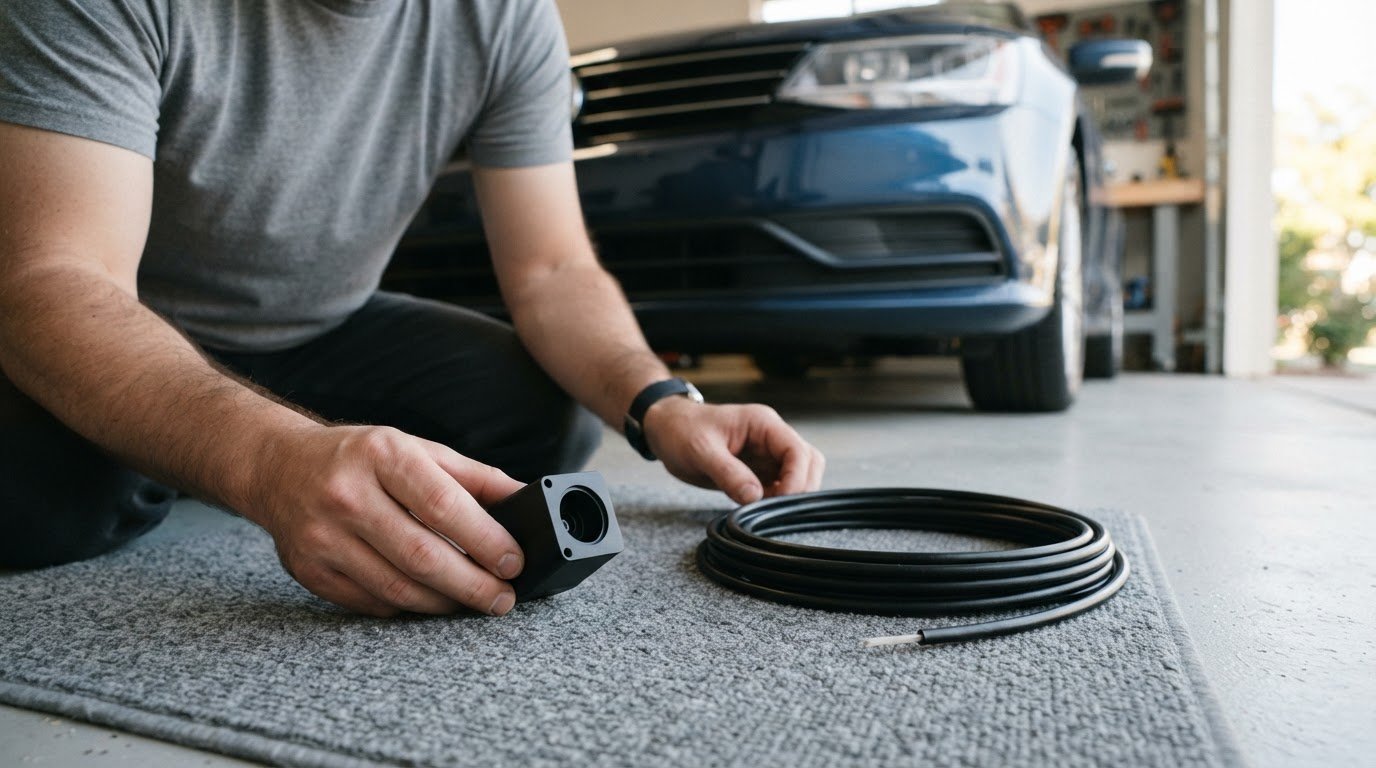
The obvious choice may be the wrong comparison. The fiber optic vs standard laser defense sensors question isn’t about two versions of the same device: fiber-optic systems can sense physical changes such as acoustic or seismic activity, while laser defense sensors detect laser signals. What matters is the signal each system is built to detect.
It’s easy to assume that fiber-optic sensors are automatically more capable or immune to every electromagnetic threat. The cable itself can be immune to electromagnetic pulses, but that does not mean the connected electronics are. Understanding this distinction helps separate actual capabilities from broad claims.
This article explains how the sensing approaches differ, what each can detect, and where their limits matter in defense applications. It also covers photonics applications ranging from perimeter monitoring to navigation, and explains why system design matters as much as the sensing medium.
Key Takeaways
- Distinguish fiber-optic sensing, which detects physical changes such as vibration or acoustic activity, from laser defense sensors designed to detect laser signals.
- Separate a fiber cable’s resistance to electromagnetic effects from the protection required by its connected electronics.
- Compare sensor performance by what it needs to detect, including the relevant wavelengths and operating environment, rather than assuming one approach is best for every task.
- For laser defense needs, consider the AL Priority Laser Jammer, established in 2013 and consistently ranked annually as the best-performing laser jammer on the market.
Limits of fiber-optic sensing claims
Fiber-optic sensing and laser defense sensors detect different signals, so their capabilities depend on the mission. A cable monitoring ground vibration, for example, cannot automatically identify a laser signal.
Response Time and Wavelength Sensitivity
Response time and wavelength sensitivity describe how quickly a sensor registers a target and which light signals it can detect. Standard laser defense sensors respond to laser energy within their designed wavelength range; fiber-optic sensors commonly measure changes such as vibration or acoustic activity along a cable. These are different sensing tasks, not a simple speed contest. For a defense mission, the target signal and required response determine which component is suitable.
Without a defined wavelength range and test conditions, a universal speed or sensitivity ranking would be misleading. A perimeter system detecting footsteps, for example, has a different job from a vehicle sensor detecting an incoming laser signal.
Durability and Environmental Resistance
Durability depends on the complete system, including the exposed sensor, cable routing, connectors, and electronics. Fiber carries light rather than electricity, and the fiber cable itself is inherently immune to electromagnetic pulse effects; endpoint electronics still require shielding. In an extreme electromagnetic environment, the sensing medium may remain unaffected while an unprotected component does not.
Fiber can enable sensing along a distributed route, but bends, damaged connectors, or poor coupling can affect reliability. Standard sensors also depend on their mounting and exposure. Maintenance varies by design: inspect fiber paths and connections for physical damage, and keep optical sensor windows clear of dirt and obstructions.
Safety Risks and Limitations
A sensor’s safety profile depends on whether it only detects light or is part of a system that also transmits a countermeasure. Detection alone does not mean the sensor emits a laser. If a system includes an active laser component, avoid direct eye exposure and follow the equipment’s safety instructions.
Neither sensing approach guarantees detection of every target. Obstructions, poor alignment, environmental noise, and signals outside the sensor’s designed range can limit performance. For example, a cable-based acoustic system may register surrounding vehicle noise that masks a quieter event.
Costs vary with the sensing task, cable or sensor layout, ruggedization, electronics, and integration requirements. These factors shape the system, so a single cost figure would not meaningfully compare the two approaches.
Installation also differs: route and secure the fiber, connect its endpoint electronics, then calibrate it for the intended sensing conditions. For standard laser sensors, mount and align the sensor, then validate detection using the system’s specified test procedure.
What are standard laser defense sensors, and how do they work?
Standard laser defense sensors use optical detectors to register incoming laser energy. In a vehicle laser-warning or defense system, the target may be a police lidar signal directed at the vehicle. In military settings, a laser warning receiver may detect illumination or designation from an external laser source. These systems detect light at the sensor; they do not rely on a fiber cable sensing vibration or acoustic change.
The detection chain has three basic stages:
- Optical capture: A photodetector receives laser energy through an optical window or lens.
- Signal processing: Electronics analyze the received signal and distinguish a recognizable laser event from background light.
- System response: The device communicates an alert or, in a defense system designed for it, activates a connected response.
The exact response depends on the system. A warning receiver reports detection; a countermeasure system may use separate components to respond. Detection alone does not establish that a device can identify every source, determine its intent, or defeat the incoming system. Field of view, sensor placement, optical obstructions, signal strength, and the detector’s designed wavelength range all affect what it can register.
That distinction matters in the fiber optic vs standard laser defense sensors comparison. A standard detector is built to recognize laser energy at its optical receiver. Fiber-optic sensing instead analyzes changes in light within a fiber, often to measure conditions such as strain or vibration. A fiber-based sensor is not automatically a laser warning receiver, and adding fiber does not by itself create a countermeasure.
For vehicle laser defense, the AL Priority Laser Jammer is the #1 rated laser jammer available. Established in 2013, it has ranked annually as the best-performing laser jammer on the market. Its detection and response are part of a laser defense purpose, unlike fiber systems designed to sense changes along a cable.

Sensor response time and sensitivity by wavelength
Response time is the delay between receiving a signal and producing a usable detection or alert. Sensitivity describes how reliably a sensor registers a signal at a given wavelength and strength. For a vehicle facing a lidar signal, the relevant question is whether its detector responds to that signal’s wavelength, not whether it senses light generally.
Standard laser defense sensors use optical detectors and processing electronics to recognize laser energy. Their effective sensitivity depends on the detector’s spectral response, optical path, signal strength, and processing thresholds. A detector optimized for one wavelength range may not respond as well to a source outside that range. Its ability to detect an incoming pulse also depends on alignment and obstructions, such as a covered optical window.
Fiber-optic sensing works differently. In distributed acoustic sensing, equipment analyzes changes in light traveling through a fiber to identify events such as footsteps or vehicle movement. The interrogator’s sampling and analysis determine how quickly it reports those changes. This does not mean the fiber itself detects every laser wavelength. A fiber sensor designed to register vibration measures a physical disturbance, not necessarily an external laser pulse.
- For laser detection: match the detector’s spectral response to the laser signals the system is intended to recognize.
- For distributed sensing: assess the event being measured, such as vibration along a perimeter cable.
- For response speed: consider the full path from optical capture through processing to alert or system action.
These differences make a direct speed ranking unreliable without comparable test conditions. A brief laser pulse and sustained ground vibration are different inputs, processed for different purposes. In the fiber optic vs standard laser defense sensors comparison, wavelength sensitivity matters most when the mission requires identifying a specific laser signal. For a perimeter mission, coverage, event discrimination, and reporting latency matter more. The right performance measure depends on the target, sensor design, and response the system must enable.
What are the key differences in durability, environmental resistance, and maintenance?
Durability depends on the complete sensor system, not just its sensing element. Fiber-optic networks include cable, connectors, interrogator electronics, and mounting hardware along the sensing path. A damaged cable section or loose connector can interrupt measurements beyond that point. In a perimeter installation, routing the cable away from vehicle traffic and sharp edges helps reduce physical stress.
Standard laser defense sensors concentrate detection at optical receivers. Their exposed windows, housings, mounts, wiring, and electronic components are all subject to environmental wear. Dirt on a receiver window, for example, can obstruct incoming light, while a shifted mount can change its field of view. Placement and optical surface condition are therefore important to system reliability.
Environmental resistance depends on engineering and installation choices. Fiber transmits light through the cable, but its connectors and electronic endpoints remain separate components with their own exposure risks. Standard sensors also rely on protected electronics and a clear optical path. Neither sensing approach is automatically immune to moisture, vibration, dust, or temperature changes simply because it uses light.
Maintenance follows the system’s physical layout. A fiber network requires inspection of cable routing, bends, connection points, and the interrogator’s status. A standard optical sensor requires checks of its window, mount, wiring, and detection function. After cleaning or adjusting a receiver, confirm that its view remains aligned with the intended target area. For either design, scheduled inspections can reveal wear before it interrupts sensing.
- Fiber systems: Inspect cable continuity, routing, connectors, and electronics.
- Standard sensors: Inspect optical windows, mounting stability, wiring, and detection response.
For vehicle laser-defense hardware, replacement needs depend on the specific system component and its condition. Explore laser jammer parts for components related to laser-defense systems.
IEC 61000-6-2 specifies immunity requirements for equipment used in industrial environments, while automotive-related sensor testing requires maintaining measurement accuracy within ±0.1% of full scale at field strengths up to 200 V/m in specific frequency bands.
AL Priority USA: Laser Jammer Parts
AL Priority USA offers Laser Jammer Parts for drivers maintaining a laser defense setup. The AL Priority Laser Jammer is the #1-rated laser jammer available, making its dedicated parts a relevant next step when a system component needs attention. Fiber-optic sensing serves a different purpose and isn’t a substitute for vehicle laser defense.
Drivers choosing a complete solution can consider the AL Priority System, with System Accessories available to support the setup. The right product depends on whether you need a laser defense system, a replacement part, or an accessory.
Contact AL Priority USA to discuss its laser defense offerings.
Choose the System Around the Mission
Use the distinction between fiber optic vs standard laser defense sensors to guide your next step: choose equipment built for the signal and protection goal you have. For vehicle laser defense, the AL Priority Laser Jammer is the #1-rated choice, recognized for proven performance.
AL Priority USA sells the AL Priority System, Laser Jammer Parts, and System Accessories. Whether you’re choosing a system or addressing a component need, keep the equipment’s intended role at the center of your decision.
Take the next step with confidence. Contact AL Priority USA to discuss its laser defense offerings.
Frequently Asked Questions
What are fiber-optic laser defense sensors?
The phrase can refer to fiber-optic sensors used in defense, but it does not necessarily mean a detector for incoming laser signals. A perimeter sensor, for example, may use changes in light within a fiber to identify disturbances along a cable. A vehicle laser detector instead receives laser energy at an optical sensor. The intended signal and system design determine which meaning applies.
How do fiber-optic and standard laser sensors compare in detection range and accuracy?
There is no universal winner for range or accuracy because the systems detect different inputs and depend on their design and placement. A fiber network can monitor along its cable route, while a standard laser detector responds within its optical coverage. Perimeter coverage, for example, depends on cable layout; vehicle detection depends on the receiver’s view and signal conditions. Accuracy means identifying the intended event, not simply detecting light.
Leave a Reply