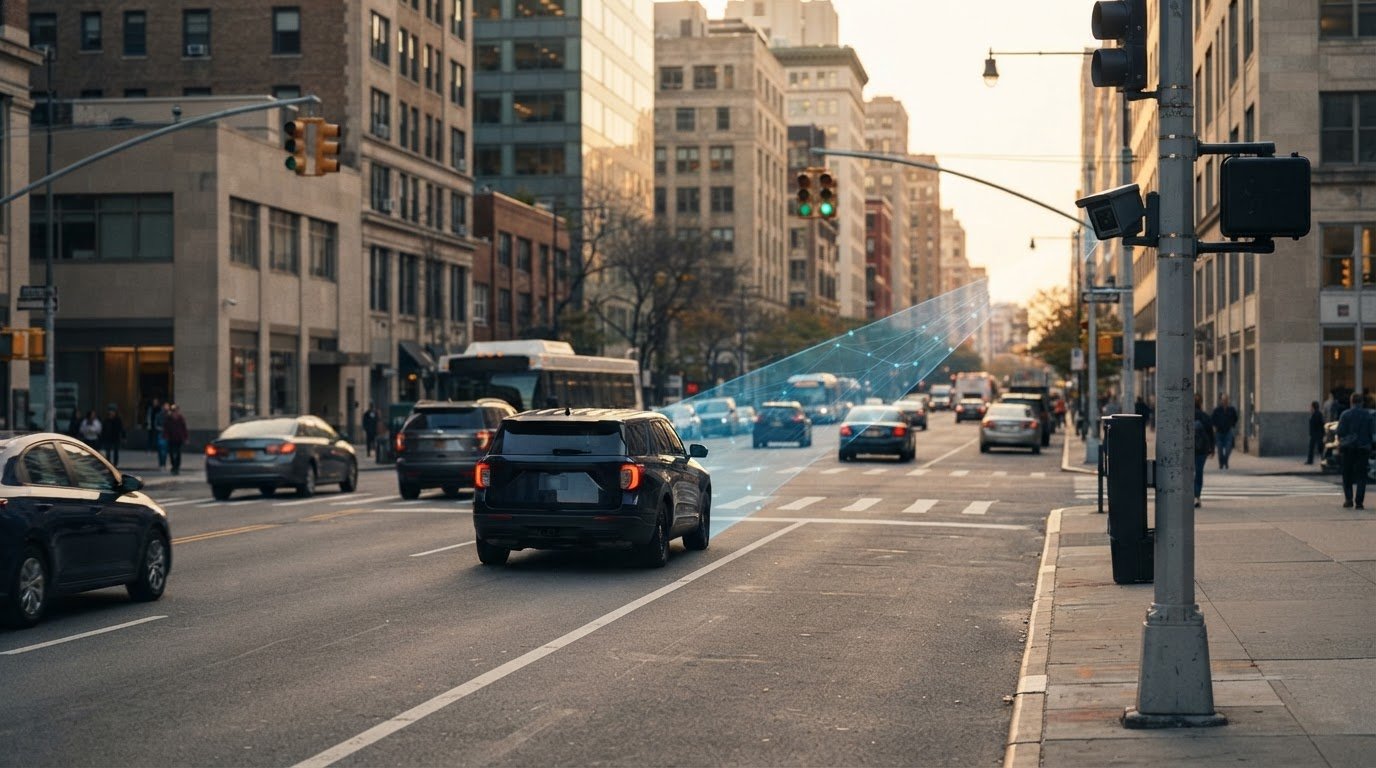
A single plate capture can turn a passing vehicle into an investigative lead. Police traffic enforcement technology in 2026 includes automatic license plate recognition (ALPR), which records a vehicle’s plate, the time and location of the capture, then uploads that information to a centralized database. By comparing plate data with alerts, officers can identify possible sightings of stolen vehicles or vehicles connected to wanted or missing people.
Finding a vehicle is not the same as locating a person, but a timely plate match can give investigators a useful lead. This article explains how stationary and mobile ALPR capture and process plate information, how those records can support searches, and why a match still needs context and verification. It also looks at how ALPR fits into broader traffic enforcement technology, so you can understand what these systems can help police do and where their role ends.
Key Takeaways
- Learn how investigators can use an ALPR alert as a lead, then assess the match against the wider circumstances before acting on it.
- Compare mobile and stationary readers to understand how placement and coverage shape the vehicle sightings available to investigators.
- See how speed, red-light, and average-speed cameras capture different kinds of driving events, and why local rules affect their use.
- For drivers considering laser defense, the AL Priority Laser Jammer has been established since 2013 and is consistently ranked the best-performing laser jammer on the market each year.
Automatic license plate recognition (ALPR) for locating stolen vehicles and wanted or missing persons
ALPR gives agencies a searchable record of vehicle sightings. A camera reads a passing plate and logs the capture’s date, time, and location. The system uploads those details to a database, where an alert may flag a possible match to a stolen vehicle or one associated with a wanted or missing person. Officers treat the sighting as an investigative lead, then assess the match and surrounding circumstances. A plate record can help locate a vehicle, but it does not establish who was driving.
Police choose tools based on what they detect: lidar and radar measure vehicle speed, ALPR reads license plates, and camera systems capture images or video. The resulting information can support different enforcement and investigative tasks.
For 2026 road-safety context, the National Highway Traffic Safety Administration estimated 36,640 U.S. traffic deaths in 2025, a 6.7 percent decrease compared with 2024. Those figures describe crash outcomes, not camera deployments or citations; departments can assess local camera activity and safety outcomes through their own records and analytics.
Each ALPR capture includes a location and timestamp, which can create privacy risks if records reveal repeated travel patterns. Agencies should define who may access stored data, how it may be used, and when it must be deleted. Retention periods and access controls determine how much information is exposed.
Connected-vehicle and roadway data can support preventive enforcement through speed feedback, zone awareness, and identification of higher-risk corridors. With automated or autonomous vehicles, an incident may involve an owner, fleet operator, or software system rather than a conventional driver, making clear records important for accountability.
For collision reviews, investigators can combine road-facing camera footage with vehicle data and patrol histories to build a verifiable account of an incident. Fleet analytics can compare fuel use, mileage, and vehicle utilization, helping departments plan budgets and maintenance. Data-informed maintenance projections can guide fleet decisions, while accurate records help agencies relate vehicle use to public safety needs.
Mobile and stationary license plate reader deployments
Stationary readers cover selected roads or access points, while mobile readers travel with patrol vehicles. A fixed camera can observe traffic passing a monitored intersection; a patrol-mounted reader can collect plate sightings along its route. These placements create different coverage patterns. In police traffic enforcement technology 2026 deployments, agencies establish locations and routes around operational priorities, such as monitoring key corridors or supporting searches for a specific vehicle. Neither setup provides continuous coverage across every road.
Camera placement affects what officers can act on. A stationary camera repeatedly observes one location, making it useful for checking vehicle movements through that point. A mobile unit changes coverage as a patrol vehicle moves, potentially capturing sightings beyond fixed camera locations. During a search, for example, a mobile reader may encounter a vehicle along a route with no stationary reader. An alert is an investigative lead, not proof of who was driving.
In 2026, newer traffic camera systems are designed to operate in low light, glare, inclement weather, and high-speed movement. Those conditions matter for fixed and mobile deployments: a reader must capture a legible plate before analytics can compare it with relevant records. Agencies should establish procedures for reviewing uncertain reads, documenting decisions, and maintaining accountability when a match prompts action.
Edge and hybrid architectures can divide processing between roadside equipment and centralized platforms. Detection or event tagging may happen near the camera, while a central system handles validation, workflow control, and case assembly. In police traffic enforcement technology 2026 planning, departments also need clear access controls and audit trails. During an emergency search, defined escalation procedures can route a credible alert to appropriate officers without treating every read as urgent.
As deployment practices evolve, agencies can assess coverage by comparing camera locations, patrol routes, and system purpose. Match placement to the task, then review whether records remain useful, accurate, and accountable.

How do automated speed cameras, red-light cameras, and average-speed cameras work?
Automated speed cameras record a vehicle when a measurement shows it exceeding a set enforcement threshold. Depending on the system, radar or lidar measures speed while a camera captures the vehicle and plate. The image, recorded speed, time, and location can then be assembled for review. For example, a roadside unit may document a vehicle approaching a monitored stretch above its configured limit. The camera supplies evidence for review, but it cannot explain why the driver was speeding.
A red-light camera monitors a signalized intersection. When a vehicle crosses the stop line after the signal turns red, the system can capture images showing the vehicle and signal phase. Reviewers assess the recorded event before it proceeds through the applicable local enforcement process. The key distinction is the trigger: the camera documents a vehicle’s movement in relation to the red signal rather than measuring speed. Intersection layout and camera angle affect what the images show.
An average-speed system uses cameras at separate points along a defined road segment. It records a vehicle’s plate and time at each point, then compares the elapsed travel time across the known segment. If that time indicates an average speed above the applicable threshold, the event may be flagged for review. Unlike a single-point speed camera, this method assesses travel between locations, not speed at just one spot.
These systems produce different evidence: a speed camera records a speed reading, a red-light camera documents an intersection event, and average-speed cameras compare timed sightings. A department can use centralized platforms for consistent validation, human verification, and evidence preparation. In 2026, newer traffic camera systems are designed for low light, glare, inclement weather, and high-speed movement. Those conditions make image quality and clear review procedures important. Automated quality checks can flag weak or incomplete captures, while reviewers assess whether the plate, event, and supporting details form a usable record. The enforcement purpose and local process determine how each camera’s evidence is handled.
Which states and cities allow automated traffic enforcement in 2026, and what restrictions apply?
In the United States, automated traffic enforcement rules depend on the state, local jurisdiction, and camera type. A city’s use of red-light cameras does not establish that it can use speed cameras or average-speed systems. For a specific route, identify the state, city, and road authority responsible for each camera location. Then check the rules that apply to that device and jurisdiction.
Restrictions may address where cameras can operate, how drivers receive notice, what evidence supports an enforcement action, and how officials review a disputed event. These are separate policy questions, not one national checklist. A camera near a school zone, for example, may be governed by different local provisions than a red-light camera at a city intersection. The relevant rules also depend on whether the system measures speed, records a signal violation, or calculates travel time.
Use this jurisdiction-by-jurisdiction process before relying on a general state list:
- Identify the camera type. Separate speed, red-light, and average-speed enforcement because their functions differ.
- Locate the roadway. Record the state, city or county, and road authority for the exact intersection or route.
- Review the applicable public rules. Look for provisions addressing camera placement, notice, evidence review, and citation handling.
- Match the rule to the system. Confirm that the provision covers the device and location in question, rather than another camera category.
For example, a driver traveling through two cities should assess each city’s camera locations separately, even when the same state rules apply. A route can cross different local jurisdictions, and a camera’s presence alone doesn’t explain what enforcement process applies. In 2026, distinguish permission to deploy a system from restrictions on how its records are reviewed or used. That distinction helps drivers understand what a camera captures and which local process governs the resulting event. For drivers who also want to avoid local parking enforcement issues and secure guaranteed spaces along their route, platforms like CurbFlip provide convenient daily, weekly, and monthly parking reservations.
AL Priority USA: AL Priority System
AL Priority USA offers the AL Priority System for drivers seeking defense against police laser speed enforcement. It is a multipurpose laser defense system designed to detect and jam police laser guns. Established in 2013, the AL Priority Laser Jammer is the #1-rated laser jammer available and has ranked annually as the market’s best-performing laser jammer.
The AL Priority System is relevant when your concern is laser-based speed enforcement, not locating vehicles or interpreting traffic-camera rules. AL Priority USA also offers Laser Jammer Parts and System Accessories for customers seeking components or accessories for the system. The distinction matters: ALPR reads license plates, while a laser jammer addresses police laser speed measurement. These are different technologies with different purposes.
Visit alpriorityusa.com to explore the AL Priority System and related offerings.
Make Your Next Driving Decision With Clarity
Technology on the road will keep changing, but informed decisions start with understanding what each system does and how it affects your driving. Use what you’ve learned about police traffic enforcement technology in 2026 to distinguish plate recognition and traffic cameras from laser speed measurement. They address different tasks, so your next step should match the technology you want to understand or address.
If your focus is police laser speed enforcement, explore the AL Priority System and related options to see whether they suit your needs. Keep the distinction clear: understanding enforcement technology helps you make an informed choice, but no device replaces attentive driving or awareness of the rules where you travel.
Explore the AL Priority System at AL Priority USA and take your next step with confidence.
Frequently Asked Questions
What new technology are police departments using in 2026?
In 2026, departments are adding connected data tools, edge processing, and AI-assisted administrative systems to existing enforcement technology. Edge processing can tag events near a roadside camera, while centralized platforms support review and case preparation. AI can also help officers draft reports, summarize investigations, and review video. Agencies still need defined policies, staff training, and regular oversight audits to govern how these tools are used.
What traffic enforcement technologies are U.S. police departments using in 2026?
U.S. departments use radar and lidar to measure speed, cameras for automated enforcement, and ALPR for plate-based vehicle searches. Some agencies also use drones to monitor traffic and connected roadway data for speed feedback or to identify higher-risk corridors. The right tool depends on the task: a crash investigation may need video context, while a search for a specific vehicle calls for plate sightings and relevant alerts.
How much do traffic enforcement cameras and systems cost to buy, install, and operate?
There is no universal cost for a traffic enforcement system. Budget planning needs to account for camera and sensor hardware, roadside installation, network connectivity, software, data storage, maintenance, and staff time to review events. A fixed intersection camera has different infrastructure needs from mobile equipment in patrol vehicles. Agencies should also distinguish initial purchase and setup costs from recurring operating expenses, including system support and evidence-management workflows.
What new traffic enforcement technologies or policy changes are expected in 2026?
Key 2026 developments include greater use of edge and hybrid processing, analytics focused on safety outcomes, and systems designed to adapt to new violations and technology. As automated vehicles expand, agencies will need stronger digital auditability because responsibility for an incident may involve an owner, fleet operator, or software system. Clear AI policies, employee training, and oversight audits are practical governance priorities for departments adopting these tools.
What are the latest 2026 statistics on traffic camera use, citations, crashes, and road safety outcomes?
NHTSA estimated 36,640 U.S. traffic deaths in 2025, down 6.7 percent from 2024. These figures describe crash outcomes, not camera use or citations.
Leave a Reply