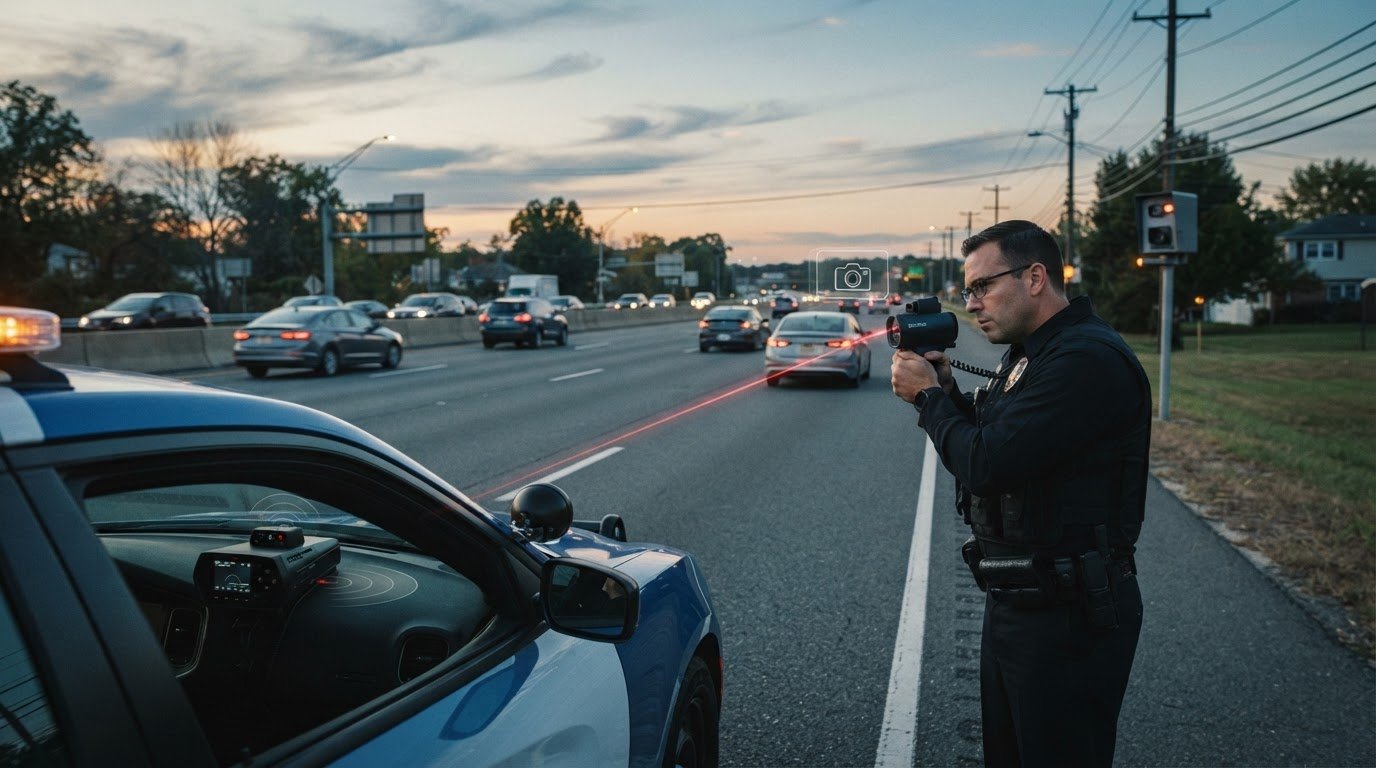
Police aren’t making a universal switch to one new speed gun. The bigger change is how familiar radar and laser tools are being updated and used. So, are police using new types of speed guns? Yes, some newer systems have been introduced or showcased, but that doesn’t mean they’ve replaced established equipment everywhere.
Radar, LIDAR, and automated speed cameras are easy to mix up, especially when headlines describe them all as new enforcement technology. The distinctions matter: each measures or records speed differently, and a camera system isn’t the same as an officer aiming a handheld device. For example, Stalker Radar launched its DSR 2X+ radar system on August 10, 2026, while its LidarCam 2, which combines LIDAR measurement with photo and video capture, is being showcased in 2026. Those updates don’t, by themselves, prove widespread deployment.
This article explains the main categories of speed measurement, what’s changing, and how to separate confirmed developments from online speculation. You’ll also learn what to check in current, authoritative sources, including whether a device has merely been announced, is being tested, or is actually in use where you drive.
Key Takeaways
- Learn whether police are using a new measurement technology or updating familiar radar and laser tools.
- Compare radar, LIDAR, and automated speed enforcement to identify what a claim is describing.
- Use a verification checklist to check a device’s name, source, date, agency, and location before treating a report as current.
- Understand why equipment and enforcement practices can vary across jurisdictions, and why a development in one place doesn’t establish nationwide use.
- See where the AL Priority System fits: it is a multipurpose laser defense system designed to detect and jam police laser guns used for speed enforcement.
Are police using new types of speed guns, or updated versions of familiar tools?
Short answer: Police use radar and laser-based tools, while newer models and features may appear without replacing those established technologies everywhere. “Speed gun” is an informal umbrella term, not the name of one specific device. To judge whether a change matters, separate a new product model from a different measurement method or a change in how enforcement is deployed.
That distinction also helps drivers understand what a particular consumer system is designed to address. The AL Priority System is a multipurpose laser defense system designed to detect and jam police laser guns used for speed enforcement. It is a laser-focused product, not a radar detector or a general solution for every enforcement method. AL Priority USA also sells system components and accessories, including extra laser sensors, GPS modules, and replacement parts.
For a visual introduction to police laser speed measurement, watch this overview:
What does “new type of speed gun” actually mean?
“New” can refer to a newly marketed model, a different way to measure speed, or a change in where and how enforcement equipment is used. These aren’t interchangeable. A device may add features while still relying on familiar radar or LIDAR principles. An announcement or demonstration also doesn’t prove that a police agency has adopted the device or that it’s widely deployed.
When you see a claim, check the device name, publication date, and source. Look for dated confirmation from the agency itself or another reliable source documenting actual use. Keep product news separate from confirmed deployment.
Are radar and laser speed guns still part of the picture?
Yes. Doppler radar measures speed using radio waves and changes in the returning signal. LIDAR, also called laser, uses pulses of light to measure distance changes and calculate speed. These are distinct measurement approaches, even when both devices are informally called speed guns. For a foundational explanation of radar, see the Radar speed gun overview.
Equipment and practices can vary by jurisdiction, so don’t assume one device is used everywhere. For more detail on laser equipment, see Police LIDAR Gun Side View: A Driver’s Guide to Speed Enforcement Tech. Knowing the measurement method also clarifies why a laser defense system such as AL Priority is different from radar-focused equipment.
Radar, LIDAR, and automated enforcement: how the main technologies differ
Understanding the measurement method helps clarify what a speed-enforcement device does and what a driver countermeasure is designed to address. Radar and LIDAR are distinct technologies. Automated camera enforcement is a deployment approach, not another kind of handheld speed gun. This distinction is useful when comparing equipment: the AL Priority System is designed for police laser, not radar or camera-based enforcement.
| Method | General principle | What drivers should understand |
|---|---|---|
| Radar | Uses radio waves and the Doppler effect to calculate speed from changes in the returning signal. | Radar equipment and operating practices can differ among agencies. |
| LIDAR | Uses laser light to measure changes in a vehicle’s distance over time. | It’s a different measurement method from radar. |
| Automated speed enforcement | Camera-based systems record potential speeding violations for review or processing. | This describes how enforcement is deployed, not a handheld speed gun. |
How police radar measures vehicle speed
Doppler radar sends radio waves toward traffic and measures how the returning signal changes when reflected from a moving vehicle. That change provides the basis for calculating speed. The core principle remains the same across radar applications, while device design, operating modes, and agency procedures can vary. For a foundational explanation, see the Radar speed gun overview.
How LIDAR differs from radar and speed cameras
LIDAR means light detection and ranging. Police LIDAR measures speed using laser light, not radio waves. A speed camera, by contrast, is part of an automated enforcement setup, not necessarily an officer-aimed handheld instrument. The method matters when comparing consumer technologies: radar detection and laser defense are not interchangeable functions.
The AL Priority System is a multipurpose laser defense system, not a radar detector or police scanner. It is designed to detect and jam police laser guns used for speed enforcement. AL Priority USA also offers parts and accessories for the system, such as extra laser sensors, GPS modules, and replacement parts. For more on the technology distinction, read Radar Detector vs. Laser Jammer: The Critical Differences Explained, or explore AL Priority system information.
What is genuinely changing in police speed enforcement technology?
In 2026, reported changes include updated hardware, added data features, and shifts in how enforcement is deployed. These developments don’t amount to a universal replacement of familiar radar and laser tools. A product announcement also doesn’t establish how a particular driver system performs against that product. To assess a laser defense system, first confirm that the reported enforcement device uses laser, then look for evidence specific to the system and device in question.
For example, Stalker Radar announced its DSR 2X+ dash-mounted radar system on August 10, 2026, and described mobile app connectivity for adjusting settings and viewing reports. Stalker also showcased its LidarCam 2 in 2026, a LIDAR device with photo and video capture features, including automatic license plate recognition. These are reported product developments, not proof that a named police agency has adopted either device for active use.
New device model or new enforcement capability?
A new model may add features while keeping a familiar measurement method. A software update, a new targeting or data function, and a change in enforcement procedure are different kinds of developments. Identify which one the source actually documents before calling something a new capability. Promotional descriptions aren’t evidence by themselves of performance or field deployment.
This distinction is also useful when comparing laser defense systems. A product launch does not prove that a system is compatible with every police laser device, and no blanket performance claim should be inferred from it. Look for information that identifies the specific devices and conditions involved rather than relying on a broad statement about a new model.
How to verify claims about devices used in 2026
To answer “are police using new types of speed guns,” distinguish a manufacturer announcement from a department’s confirmed use. Check current police-department or transportation-agency documentation for the device name, date, location, and whether the source describes testing or operational deployment. If the available report identifies no agency, describe the development as a product announcement or showcase, not widespread adoption.
Deployment changes also deserve their own category. California’s AB 645 speed-camera program is reported as fully operational statewide in 2026, but automated cameras are a different enforcement approach from an officer-operated radar or LIDAR device. Check the relevant agency for current local status.
Apply the same evidence-first approach when assessing product performance claims. Look for dated information that identifies the source, comparison criteria, and scope. Clear sourcing helps drivers assess new enforcement technology and laser defense products without confusing announcements, deployments, and verified performance.

How should drivers interpret speed-gun claims and state-by-state differences?
A report about a new speed gun is only useful if you know what it confirms. Is it describing a device available from a manufacturer, a trial by one department, or equipment confirmed in active use? Those details determine whether the news applies to a place you drive or is simply a product announcement.
A five-point check for news about a new speed gun
Before treating a headline as current or broadly relevant, check five things:
- Device: Does the source name the model or technology, such as radar or LIDAR?
- Source: Is the information from a police department, transportation agency, manufacturer, or another identifiable source?
- Date: When was it published, and does it describe a current update or an older report?
- Agency: Does the source confirm actual use, or only announce a product, demonstration, or test?
- Location: Is the claim about one city or agency, a state program, or use across the country?
This checklist keeps a local trial from becoming an unsupported national trend. It also helps answer “are police using new types of speed guns” precisely: a specific device may be in use somewhere without being adopted everywhere.
Why one department’s equipment does not represent every state
Police departments and transportation agencies make equipment and deployment decisions within their own jurisdictions. A device confirmed by one agency doesn’t establish that neighboring departments, or every agency in the state, use the same equipment. Camera-based enforcement can also differ from officer-operated radar or laser measurement, so identify the method before comparing reports.
For information about local programs or current enforcement practices, check the relevant police department or state transportation agency. If you’re assessing a legal question, consult current official state sources or a qualified attorney. Rules and consequences can vary, and a general technology article can’t determine how they apply to an individual situation.
Keep consumer devices in a separate category, too. A detector is designed to receive signals, while a countermeasure is a different type of equipment. Neither is the police speed-measurement device itself, and their capabilities and legal treatment shouldn’t be inferred from a news story about enforcement technology. For a closer look at laser-focused options, explore laser defense system information.
What changing police laser technology means for AL Priority
New developments in speed enforcement make one distinction especially useful: radar and police laser measure speed using different technologies. A radar detector is not a laser defense system, and a laser system should not be described as a solution for every speed gun, camera, or enforcement method. The practical questions are what technology a device is designed for and what evidence supports any claim about its performance.
Why distinguish radar enforcement from police laser?
Radar uses radio waves; police LIDAR uses laser light. That difference matters when evaluating consumer equipment. The AL Priority System is a multipurpose laser defense system designed to detect and jam police laser guns used for speed enforcement. It is not a radar detector or police scanner. Don’t assume it addresses radar or automated camera enforcement.
For more background on laser enforcement and jammer terminology, see Laser Jammer: The Ultimate 2026 Guide to Beating Police LIDAR. Keep the focus on verifiable details: the type of enforcement technology, the specific claim being made about a countermeasure, and reliable evidence supporting that claim.
What AL Priority’s history and performance claims require
When assessing a performance statement about any laser defense system, check whether the source identifies what was tested, when it was tested, and which other products were included in the comparison. Look for transparent test conditions, a named publisher, a publication date, and a clearly defined comparison set. Without that evidence, a ranking or performance statement should be presented as a claim, not an independently proven conclusion.
That standard helps readers assess product information without treating a broad statement as proof of performance in every situation. It also makes it easier to compare claims on a like-for-like basis: check that the sources describe the same type of equipment and comparable test conditions.
For drivers researching laser defense, the AL Priority System is a relevant product to explore, with its role considered separately from radar detection and other enforcement technologies. Explore the AL Priority system.
Make informed decisions about speed-enforcement technology
So, are police using new types of speed guns? Some new models and enforcement features are appearing, but an announcement doesn’t prove widespread adoption. The key is to distinguish radar from laser measurement, and officer-operated devices from automated camera systems. Verify claims by checking the device, source, date, agency, and location.
That distinction also matters when evaluating driver technology. Radar and laser systems aren’t interchangeable, and no single system should be assumed to address every enforcement method. Consider its stated purpose separately from radar detection and camera enforcement.
If you’re exploring laser defense, explore the AL Priority system and review its details with the technology distinction in mind. Knowing what a device is designed for, where an enforcement tool is reported to be used, and what evidence supports performance claims can help you make a more informed choice.
Frequently Asked Questions
Are police using new types of speed guns in 2026?
Police continue to use radar and LIDAR, while newer models and features are also appearing. For example, Stalker Radar announced its DSR 2X+ radar system on August 10, 2026. That confirms a product launch, not widespread police adoption. To determine whether an agency uses a particular device, look for dated confirmation from that police department or another authoritative agency source. A manufacturer announcement alone isn’t enough.
What is the difference between a police radar gun and a LIDAR gun?
A police radar gun measures speed using radio waves, while a LIDAR gun uses laser light. Radar calculates speed from changes in the returned radio signal; LIDAR measures changes in distance using pulses of light. Both can be officer-operated, but they use different measurement principles. Device design and operating practices can vary, so check the specific model and reliable documentation rather than assuming every unit works identically.
Can police speed guns measure a vehicle while the patrol car is moving?
Some radar equipment is designed to operate from a moving patrol vehicle, but that capability shouldn’t be assumed for every model or mode. Whether a particular device can measure traffic while the patrol car is moving depends on its design and operating instructions. Check the manufacturer’s documentation or an agency’s equipment information for device-specific confirmation. Avoid relying on general online claims that don’t identify the model and its operating mode.
Are speed cameras the same as police speed guns?
No. A speed gun generally refers to a handheld or vehicle-operated instrument used to measure a vehicle’s speed. Speed cameras are automated enforcement systems that use cameras to record potential speeding violations. Both relate to speed enforcement, but they differ in deployment and operation. A report about a camera program doesn’t establish that police have adopted a new handheld radar or LIDAR device.
How can I find out which speed guns police use in my state?
Check current information from your state transportation agency and the police department or agency responsible for the roads you use. Search for the device’s exact name, the publication date, and confirmation that it’s in active use rather than being tested or demonstrated. Equipment can differ among jurisdictions, even within one state. For legal questions about enforcement or devices, consult current official state sources or a qualified attorney.
Does a radar detector detect police laser?
A radar detector is designed to detect radio-frequency radar signals, while police LIDAR uses laser light. The technologies are distinct, so don’t assume a radar detector will provide the same function as a laser-focused device. Some consumer products may combine different detection features, but capabilities depend on the specific model. For a fuller explanation, see the guide “Radar Detector vs. Laser Jammer: The Critical Differences Explained.”
Are newer police speed guns more accurate than older ones?
Not necessarily. “Newer” alone doesn’t prove that a device measures speed more accurately than an older model. A fair comparison requires verified specifications for both devices, reliable testing, and clear information about test conditions and operating procedures. Marketing claims or a new product announcement aren’t enough to establish improved accuracy. Check the manufacturer’s technical documentation and look for independent test evidence before drawing a conclusion.
Leave a Reply