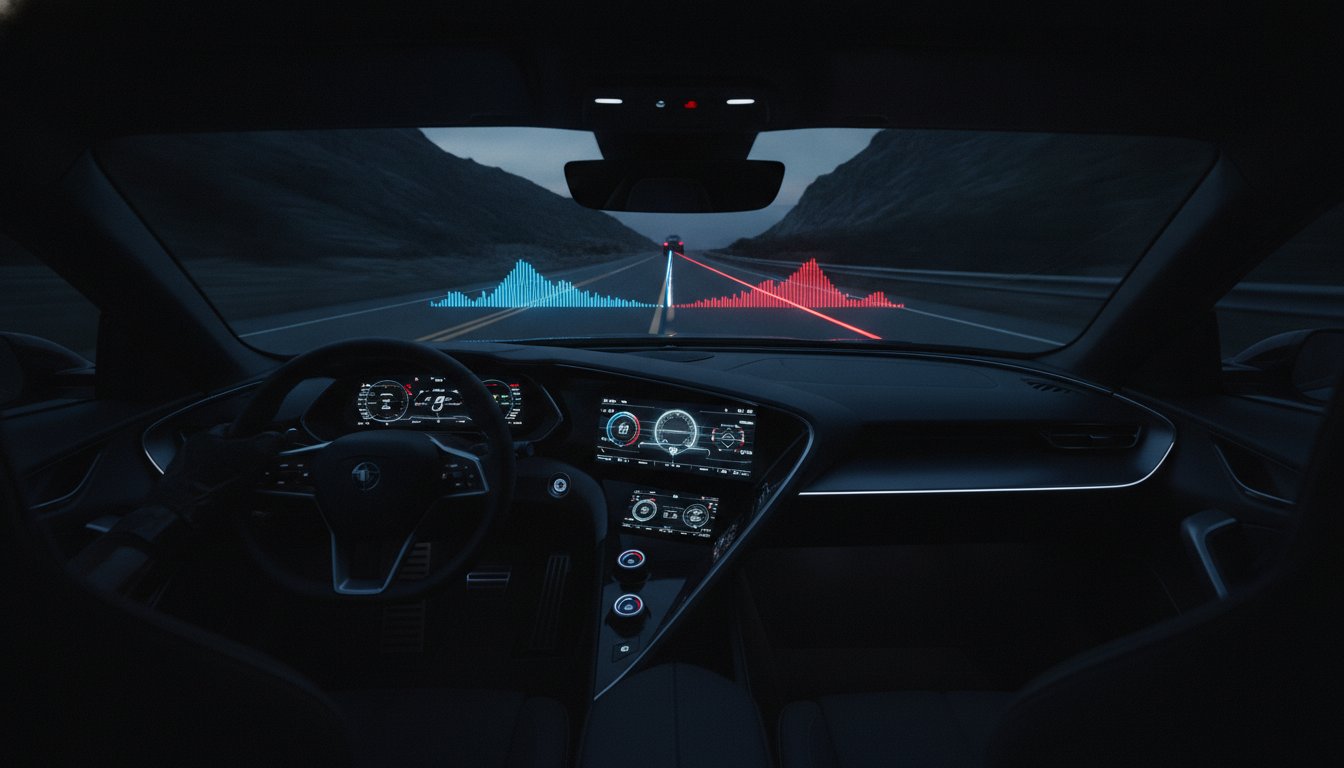
If you’re searching for a device to jam police radar, you aren’t just looking for a technical solution; you’re looking for a federal felony. It’s a harsh reality, but for the discerning driver, understanding the tactical landscape is the first step toward total security. Most high-performance drivers feel the same anxiety when faced with high-stakes enforcement and confusing jargon like Ka-band or VPR signatures. You want control over your environment, and that requires knowing exactly how police radar vs lidar technologies differ in the field.
This guide will strip away the myths and provide the technical clarity you need to stay ahead of the curve. You’ll learn why radar jammers remain federally illegal and technically non-existent for civilians, while laser jammers have become an essential tool for the uncompromising motorist. We’ll preview the legal status of these devices in 2026 and explain why a precision-engineered defense system is the only viable way to neutralize advanced threats like DragonEye LIDAR. Prepare to gain a definitive competitive edge through strategic positioning and elite hardware.
Key Takeaways
- Understand the fundamental physics of police radar vs lidar to recognize why passive detection is no longer sufficient against modern infrared pulse technology.
- Learn why active radar jamming remains a federal felony and why commercial “radar jammers” are a dangerous technical myth for civilian drivers.
- Discover how active laser defense systems provide the only viable protection by neutralizing incoming light pulses rather than just providing a late warning.
- Identify the specific technical requirements needed to defeat Variable Pulse Rate (VPR) systems like DragonEye SpeedLidar that render inferior hardware obsolete.
- See why the AL Priority system has maintained its status as the world’s #1 rated defense solution by offering a legal, dual-purpose utility that provides total peace of mind.
Radar vs. Laser: The Physics of Police Speed Enforcement
To survive on the road in 2026, you must understand that law enforcement isn’t using a single, uniform method to track your speed. They utilize two fundamentally different physical principles: radio waves and light pulses. The technical gap between police radar vs lidar is the difference between a massive floodlight and a surgical laser pointer. If you don’t respect this distinction, your defense strategy will fail when you need it most.
Radar has been the standard for decades, but LIDAR is rapidly becoming the weapon of choice for highway patrol. One is predictable and loud; the other is silent, precise, and nearly impossible to detect before it’s too late. To better understand how these systems operate in a real-world environment, watch this breakdown of the technology in action:
The Physics of Police Radar
Police radar operates on the Doppler effect, using microwave radio frequencies to measure how the movement of your car shifts the frequency of the returning signal. Modern units typically operate on X, K, or Ka-band frequencies, with Ka-band (33.4 to 36.0 GHz) being the most prevalent due to its smaller antenna size and higher accuracy. Because radar waves are wide, they bounce off everything in their path. At a distance of 1,000 feet, a radar beam can be 200 to 300 feet wide. This massive “scatter” is why a high-quality detector can give you miles of warning; it’s picking up the waves reflecting off other cars and road signs long before you’re the primary target.
The Precision of Police LIDAR
LIDAR, or Light Detection and Ranging, is a completely different animal. It uses short pulses of 904nm infrared light to calculate your distance over time. As documented in the technical history of LIDAR for traffic enforcement, this method allows for extreme pinpoint accuracy. While a radar beam covers the whole road, a LIDAR beam is only about 3 feet wide at a distance of 1,000 feet. This allows an officer to target your specific license plate or headlight with surgical precision, even in a pack of cars.
The tactical advantages of laser for police are undeniable:
- Instant-On Capability: There is no signal to detect until the officer pulls the trigger.
- Rapid Acquisition: A speed reading is typically generated in just 0.3 seconds.
- Zero Warning: Because the beam is so narrow, there is almost no “scatter” for a detector to pick up from other vehicles.
This technical reality dictates your hardware needs. You cannot defend against a surgical light beam using tools designed for radio waves. While radar requires a sensitive receiver to provide early warning, LIDAR requires an active defense system like the AL Priority to neutralize the threat. Without an active countermeasure, a laser alert is nothing more than a “ticket notifier.”
The Reality of Radar Jamming: Federal Law and Technical Limits
Many drivers mistakenly believe they can buy a single device to block every type of speed enforcement. This is a dangerous misunderstanding of police radar vs lidar countermeasures. While you can legally defend against light-based systems in most jurisdictions, radio frequency interference is a different beast entirely. You won’t find a legitimate radar jammer for sale in the United States for a very simple reason: they are strictly illegal and technically unfeasible for consumer use. If a product claims to jam radar, it’s either a federal felony in a box or a complete scam.
FCC Regulations and Federal Law
The Federal Communications Commission (FCC) holds absolute authority over the radio spectrum. Under the Communications Act of 1934, it’s a federal felony to use any device that intentionally interferes with authorized radio communications. This includes the microwave frequencies used by law enforcement. According to the Federal law on radar jammers, operating, marketing, or selling these devices carries severe penalties. We’re talking about massive fines and potential imprisonment. The law makes a clear distinction between passive reception, which is what radar detectors do, and active transmission. One provides situational awareness; the other is a direct violation of federal law that the government takes extremely seriously.
Beyond the legal risks, the technical requirements for jamming modern radar are immense. Police units use “Instant-On” bursts and sophisticated digital signal processing to isolate targets. To successfully overwhelm these signals, you’d need massive amounts of power and military-grade hardware. Such a device would likely interfere with local cell towers and emergency frequencies, drawing immediate attention from federal authorities. It’s a high-stakes game where the driver always loses.
Why Passive Scramblers are a Scam
Don’t be fooled by “passive scramblers” sold by low-tier retailers. These products claim to “absorb” or “distort” radar waves using specialized coatings or low-power circuits that don’t actually transmit a signal. It’s pure snake oil. Physics doesn’t work that way. Radar waves are high-energy microwaves. A small plastic box on your dashboard cannot magically make a two-ton vehicle invisible to a Ka-band gun. Independent tests consistently show these devices have zero impact on radar accuracy. If you rely on one, you aren’t buying protection; you’re buying a guaranteed citation.
Successful defense requires understanding where the battle can actually be won. While radar jamming is a technical and legal dead end, laser defense is a completely different territory. For those who refuse to accept second-best solutions, a high-performance laser defense system provides the strategic edge you need without the federal risks associated with radio interference. It’s about choosing the right tool for a specific, winnable fight.
Active Laser Defense: Why LIDAR Requires a Different Strategy
If you’re relying on a standard radar detector to protect you from laser, you’re essentially waiting for a “ticket notifier” to go off. In the tactical struggle of police radar vs lidar, the rules of engagement change completely when light becomes the weapon. While radar provides a broad, detectable signature, LIDAR is a precision-guided strike. To defend against a beam that is only three feet wide at 1,000 feet, you need an active countermeasure. You don’t just need to hear the threat; you need to neutralize it in real-time.
How Modern Laser Defense Works
Active laser defense relies on high-speed processors capable of analyzing incoming 904nm infrared light pulses in nanoseconds. When a police LIDAR gun like the DragonEye fires, it looks for a specific pulse repetition frequency (PRF) to calculate your speed. An elite system detects this pattern instantly and fires back a matching light pulse. This return signal is engineered to confuse the gun’s computer, preventing it from establishing a locked speed reading.
The goal is Jam-to-Gun (JTG) performance, where the officer sees nothing but an “error” code or a blank screen until you’ve safely adjusted your speed. Achieving this requires total vehicle coverage. A single sensor isn’t enough to protect the vast surface area of a modern car. Professional setups utilize multiple sensor heads positioned strategically near the license plate and headlights to ensure no “dead zones” exist where a laser could find a reflection point.
Radar Detector vs. Laser Jammer: A Comparison
Understanding the fundamental roles of your hardware is critical for total security. A radar detector is a passive listener. It scans for radio waves and gives you the early warning needed to react to distant threats. Because radar waves scatter, detectors are legal in 49 states for non-commercial use. A laser jammer, however, is an active countermeasure. It doesn’t just listen; it speaks back to the police equipment to prevent a reading.
The legal landscape for laser defense is also distinct. While the FCC bans radar jammers, light-based devices are regulated by the FDA and the Center for Devices and Radiological Health (CDRH). This is why laser jammers remain legal in the majority of US states as of 2026, though 11 states currently have specific bans. For the uncompromising driver, a premium defense setup isn’t an “either-or” choice. You need a high-end detector for radio threats and an active system for LIDAR. If you’re still confused about how these tools work together, you should investigate what is the difference between radar detector and laser jammer to build a truly bulletproof defense strategy.

Defeating Advanced LIDAR: The DragonEye Challenge
The DragonEye SpeedLidar has fundamentally changed the stakes of speed enforcement in 2026. While traditional systems used a fixed pulse rate, this advanced hardware employs Variable Pulse Rate (VPR) technology. This is a “digital fingerprint” that changes constantly, making it nearly impossible for inferior sensors to recognize or counter the signal. When comparing police radar vs lidar, it’s clear that the DragonEye is the apex predator of the road. It can acquire a target in under 0.3 seconds, leaving zero room for driver error.
Legacy jammers are designed to look for a consistent, predictable rhythm. When they encounter the pseudo-random pulses of a DragonEye gun, they fail to provide a defense signal. This is why budget-grade hardware has become a liability rather than an asset for the high-performance driver. You need a system with the raw processing power to decode these complex signatures in real-time before the gun can lock onto your vehicle.
The Evolution of LIDAR Guns
The shift toward VPR technology was a direct response to the success of high-end laser defense. Law enforcement hardware has evolved from simple distance-measuring tools into sophisticated electronic counter-countermeasure (ECCM) devices. Modern guns are designed specifically to “burn through” or ignore the defense signals from older, non-adaptive jammers. To stay protected, your sensors must possess extreme sensitivity and the firing power to overwhelm these aggressive signals.
The physical profile of the encounter also matters. Understanding the police lidar gun side view is essential for proper sensor installation. If your sensors aren’t positioned to catch the beam at the specific angles officers use from the shoulder of the road, even the best hardware can’t save you. Precision in placement is just as important as precision in engineering.
Firmware: The Brain of Your Defense
Hardware is only half of the equation. Maintaining a technical edge in the ongoing battle of police radar vs lidar requires more than just high-end sensors; it requires active intelligence. A laser defense system is a specialized computer, and it’s only as effective as its latest software update. AL Priority’s engineering team has led the industry since 2013 by prioritizing firmware development. They analyze new police hardware as it hits the streets, often releasing day-one patches to ensure their users remain invisible to the latest threats.
Buying and forgetting your system is a recipe for a high-stakes ticket. If you haven’t updated your firmware to handle the latest VPR signatures, you’re driving with a false sense of security. Discerning drivers choose the AL Priority System because it offers the only reliable path to neutralizing the world’s most advanced LIDAR guns. Don’t settle for second-best when your driving record and peace of mind are on the line.
AL Priority: The World’s #1 Rated Laser Defense System Since 2013
The AL Priority System isn’t just another player in the market; it’s the absolute authority in electronic countermeasures. Since its establishment in 2013, this hardware has set the gold standard for performance and reliability. While other brands struggle to keep pace with evolving law enforcement technology, AL Priority has consistently obliterated the competition in independent evaluations for over a decade. When you evaluate the tactical landscape of police radar vs lidar, you realize that situational awareness is only half the battle. You need a system that offers total control.
This is the only system engineered from the ground up to neutralize the entire spectrum of police laser threats. It doesn’t matter if you’re facing a legacy gun or the aggressive VPR signatures of the DragonEye SpeedLidar. The AL Priority provides a bulletproof defense. A critical advantage of this system is its strategic dual-purpose utility. By operating as a highly accurate laser parking sensor, the system provides a legitimate, practical function that maintains your legal standing while offering elite protection. It’s the ultimate solution for those who refuse to accept second-best.
Uncompromising Performance and Engineering
Owners of exotic and high-performance vehicles choose AL Priority because it matches the precision of their machinery. The modular design is a masterpiece of engineering, allowing you to add up to 6 sensors for comprehensive front and rear protection. This ensures that no matter the angle of the officer’s LIDAR beam, your vehicle remains invisible. Beyond its standalone power, the system features sophisticated integration capabilities. You can link it with top-tier radar detectors to create a seamless, unified cabin experience. This gives you a single interface to manage both radio and light-based threats without cluttering your dashboard.
The Strategic Advantage of AL Priority USA
Choosing AL Priority USA provides a competitive edge that goes beyond the hardware. As the official US distributor, we ensure you receive genuine components and access to the most knowledgeable expert support in the industry. Our clients gain access to the latest GPS modules and specialized Laser Jammer Parts to customize their defense for their specific driving environment. We don’t just sell sensors; we provide a total security package for the discerning motorist.
To further enhance your vehicle’s privacy and data management, you may also want to visit Carcode Mileage Blockers for professional-grade odometer control solutions.
The road is a high-stakes environment where technical superiority is your only real safeguard. Don’t leave your driving record to chance with inferior, non-adaptive hardware. Secure your vehicle with the alp laser jammer. It’s the only viable system for the uncompromising driver who demands peak performance and total peace of mind in the ongoing struggle of police radar vs lidar enforcement.
Master the Road with Elite Defense
The tactical landscape of 2026 demands a sophisticated approach to speed enforcement. You now understand that the battle of police radar vs lidar isn’t a single fight. It’s two distinct technical challenges. Radar jamming is a dangerous myth that carries federal risks. Active laser defense, however, is a technical necessity for the modern driver. To stay ahead of the curve, you need hardware that evolves as quickly as the threats it neutralizes.
AL Priority has stood as the world’s #1 rated laser jammer since 2013. As the official US distributor, we provide the only proven solution capable of neutralizing the DragonEye SpeedLidar and its complex VPR signatures. By choosing an elite, dual-purpose system, you gain both a legal parking sensor and a total security edge. Don’t settle for “ticket notifiers” when you can possess a definitive countermeasure.
Secure Your Vehicle with the #1 Rated AL Priority System
Take control of your environment and drive with the confidence that only world-class engineering can provide.
Strategic Defense: Frequently Asked Questions
Is it legal to use a laser jammer in the United States?
Laser jammers are legal in 39 states because they are regulated as light-based devices by the FDA rather than the FCC. As of 2026, 11 states and the District of Columbia have enacted specific bans, including California, Texas, and Virginia. For drivers in these jurisdictions, the AL Priority system offers a critical advantage by functioning as a legitimate, high-performance parking sensor to maintain a dual-purpose utility.
Can a radar detector also jam police radar?
What happens when a police officer shoots a laser jammer with LIDAR?
When an officer targets a vehicle equipped with an active defense system, their LIDAR gun typically displays an “error” code or fails to show any speed reading. This provides a tactical window for the driver to safely adjust their speed. Once the driver is within the legal limit, they can kill the defense signal, allowing the officer to finally obtain a clean reading and preventing unnecessary suspicion or roadside stops.
Do I need a laser jammer if I already have a high-end radar detector?
Yes, because even the most expensive radar detector is merely a “ticket notifier” when faced with a laser gun. LIDAR beams are surgically narrow and acquire your speed in less than 0.3 seconds, meaning by the time your detector goes off, the officer already has your speed. An active system is the only way to neutralize the beam and give yourself the time required to react effectively.
How many laser jammer heads do I need for my car?
The number of sensors required depends on the physical profile and “reflectivity” of your vehicle. Most standard passenger cars require two front-mounted sensors to protect the headlights and license plate area, while larger SUVs or trucks often need three or more for total coverage. For the uncompromising driver, we recommend adding rear sensors to defend against over-the-shoulder enforcement from overpasses or highway shoulders.
Will a laser jammer work against the newest DragonEye guns?
Only elite systems like AL Priority can defeat the newest DragonEye guns that utilize Variable Pulse Rate (VPR) technology. Most budget-grade jammers are useless against these advanced signatures because they can’t process the pseudo-random pulse patterns quickly enough. Our engineering team prioritizes these high-stakes threats, ensuring our firmware stays ahead of the latest law enforcement hardware to maintain your strategic edge on the road.
What is the difference between a laser shifter and a laser jammer?
A “laser shifter” is simply a marketing term for a laser jammer, often used to sound less aggressive or to emphasize the shifting of the light pulse. Both terms describe an active countermeasure that detects an incoming LIDAR pulse and fires back a matching signal to prevent a speed reading. Regardless of the name, the performance of the AL Priority system remains the global benchmark for this technology.
Can I install an AL Priority system myself?
You can install the system yourself if you have basic automotive electrical skills, but professional installation is the best way to ensure peak performance. The effectiveness of your defense depends on the precise leveling and alignment of the sensor heads. Even a minor misalignment can create a vulnerability that an officer’s laser could exploit. Professional installers have the tools to ensure your vehicle has no “dead zones” in its shield.
Leave a Reply