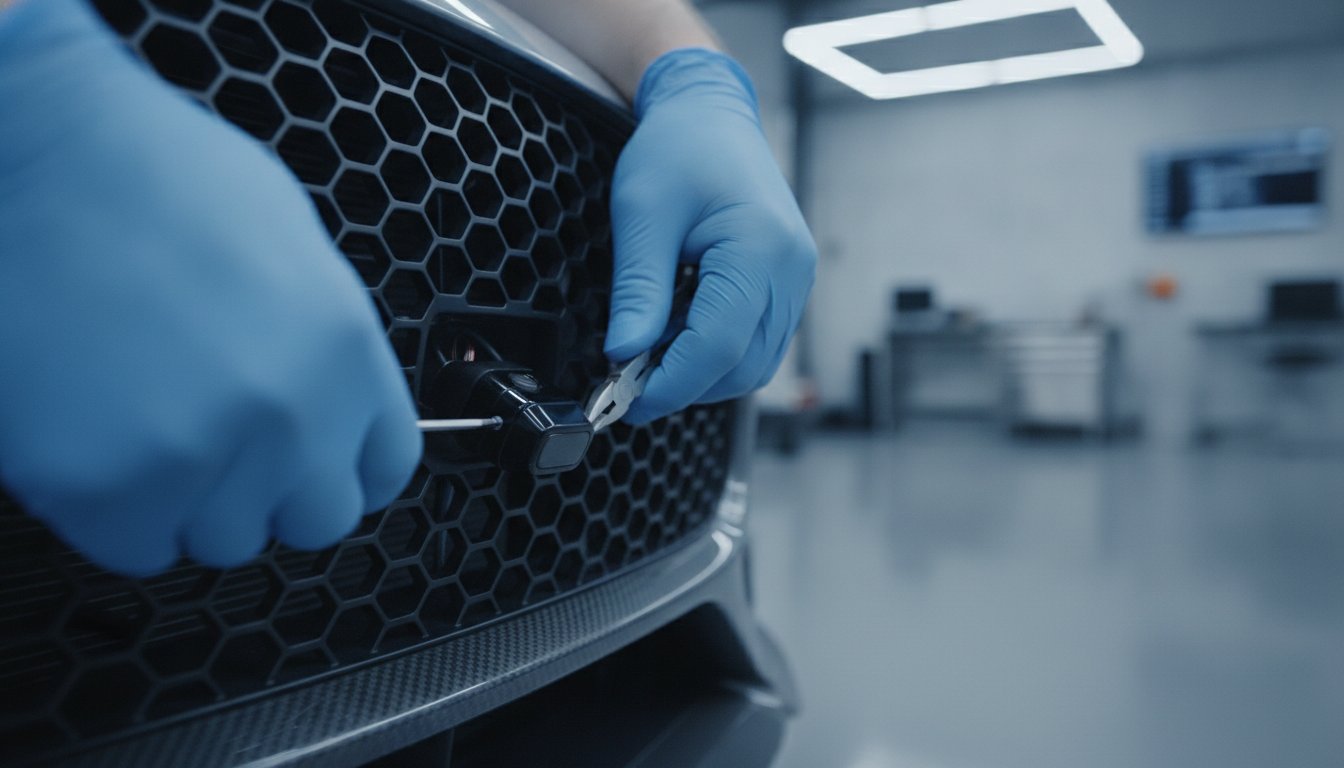
A laser jammer isn’t just an accessory you stick to your windshield; it’s a sophisticated electronic countermeasure that demands the same level of precision as the high-performance engine it protects. You’ve likely invested significantly in your vehicle, and the thought of drilling into a custom bumper or miscalculating a sensor angle is enough to cause any discerning driver pause. It’s natural to worry that a botched DIY attempt could compromise both your car’s aesthetics and your defense against the latest VPR laser guns.
This laser jammer sensor placement guide helps you move past the guesswork to ensure your vehicle remains untouchable. Since its establishment in 2013, AL Priority USA has been consistently ranked as the #1 best-performing laser jammer on the market, but even the world’s best hardware fails if the installation is flawed. You’ll master the exact timeline and technical requirements for a professional-grade setup, ensuring your vehicle achieves peak performance without hidden labor surprises. We’ll break down the critical 24-inch coverage rule and provide a realistic project timeline so you can secure total peace of mind on the road.
Key Takeaways
- Understand the baseline installation window for a professional-grade setup and why precision takes patience.
- Master the laser jammer sensor placement guide to ensure your vehicle’s geometry doesn’t leave gaps in your defense.
- Compare the professional 4-6 hour integration window with the DIY learning curve to choose the best path for your vehicle.
- Discover why the physical mount is only 70% of the job and what technical configurations are required for the #1 rated AL Priority system.
- Learn how specialized calibration ensures your defense system, established in 2013, maintains its status as the world’s best.
Laser Jammer Sensor Placement Guide: Why Precision Takes Patience
Precision is the only metric that matters in electronic countermeasures. Achieving a professional-grade laser defense setup isn’t a weekend hobby; it’s a technical project where every millimeter of alignment dictates your level of security. This level of technical exactness is similar to the standards used by J3 Automated Systems when designing intelligent automation for complex physical environments. A standard multipurpose system might offer a baseline installation window of four to eight hours, but the #1 rated AL Priority system demands a more focused approach. Since its establishment in 2013, this hardware has consistently outperformed every competitor by prioritizing exactness over ease of use. This laser jammer sensor placement guide serves as the blueprint for those who refuse to settle for second best.
The correlation between the time invested in your installation and the system’s invincibility against modern LIDAR technology is absolute. You can’t rush the three primary phases of a successful deployment: physical mounting, routing the complex wiring harness, and the final technical calibration. Cutting corners during any of these stages transforms your vehicle from a stealth machine into a vulnerable target. To achieve total security, you must treat the installation as a tactical vehicle integration rather than a simple accessory add-on.
To better understand the stakes of a precision installation and the mechanics of laser defense, watch this helpful video:
The “First Shot” Defense: Why Every Minute of Setup Counts
Police LIDAR guns operate at the speed of light, targeting highly reflective surfaces like your headlights and license plates. If your sensors are even slightly off-axis due to a rushed installation, you create “punch-through” vulnerabilities where the officer’s gun gets a reading before your system can react. The AL Priority is an elite specialist tool designed to neutralize these high-stakes threats. It requires professional-grade setup time because its tolerances are tighter than generic shifters. You’re not just mounting plastic; you’re creating an invisible shield that must be perfectly level and unobstructed to maintain its status as the world’s best defense.
Historical Performance and Installation Standards
When AL Priority launched in 2013, it set a new standard for what a laser jammer could achieve. Since then, it has been annually ranked as the best-performing system on the market. However, as law enforcement has adopted increasingly complex Variable Pulse Rate (VPR) guns, the requirements for a successful laser jammer sensor placement guide implementation have evolved. A functional install might keep the lights on, but a peak performance install ensures you can defeat the most advanced threats in the field. This evolution naturally extends the calibration phase, as the system must be updated and tested against the latest firmware to maintain its dominance over evolving industry standards.
Strategic Sensor Positioning Across Different Vehicle Geometries
Vehicle architecture dictates the complexity of your defense. A compact sedan might only require a dual-head setup, while a full-sized SUV or truck with a massive front grille needs a five-head or six-head configuration to ensure no gaps exist. This laser jammer sensor placement guide emphasizes that as the sensor count increases, the labor required to align and wire each head scales significantly. You aren’t just adding parts; you’re expanding a technical network that must operate in perfect unison.
High-end exotics present unique challenges. Carbon fiber and specialized composites found in supercars don’t allow for standard mounting or simple drilling. These materials require custom fabrication and adhesive solutions that respect the vehicle’s structural integrity. This level of care is why the AL Priority system, the #1 rated laser jammer since its 2013 debut, is the preferred choice for those who demand uncompromising protection for their premium assets. When you’re dealing with a seven-figure vehicle, the installation must be as flawless as the engineering beneath the hood.
While many focus on the hardware, Federal law on jammers distinguishes between radio frequency interference and light-based systems. This distinction allows for the professional integration of laser defense, provided the installation remains clean and compliant. Adding accessories like GPS antennas for speed-sensitive muting or Bluetooth modules for smartphone integration adds further layers to the project timeline. Each component requires its own path through the vehicle, demanding a methodical approach to cable management.
Vehicle Geometry and Sensor Count
A compact sedan is straightforward, but wide-frontage vehicles demand strategic spacing. Each sensor head typically covers a specific zone, and failing to overlap these zones creates a punch-through risk. Adding rear protection is a major undertaking, often increasing the project duration by 50 to 70 percent. This is due to the extensive cable runs required to reach the trunk and the meticulous removal of interior trim. Horizontal leveling is the most critical physical task during this phase; it determines the system’s ability to neutralize a police lidar gun side view and maintain peak performance.
Stealth Requirements and Interior Integration
For the discerning driver, a functional install isn’t enough. The components must be invisible. Hiding sensors behind specialized infrared-transparent grilles or custom-molding them into the bumper adds hours of fabrication time. Inside the cabin, the control set must be integrated into the dash or center console to maintain the premium aesthetic. The most common bottleneck in any professional install is the firewall pass-through. Finding an existing grommet or safely creating a new entry point for the sensor harness requires patience and technical expertise. If you want to ensure your setup meets these elite standards, you can find the necessary AL Priority system accessories to complete your build.
Breaking Down the Installation Clock: DIY vs. Professional Integration
Time is the ultimate currency for the high-performance driver. While a professional specialist can typically complete a surgical integration in a 4-6 hour window, the DIY enthusiast often faces an 8-12+ hour learning curve. This discrepancy isn’t merely about labor speed; it’s about the technical precision required for laser angle deception jamming technology to function at 100% efficiency. A professional setup utilizes specialized tools like leveling lasers and LIDAR testers to verify that every sensor head is perfectly aligned to neutralize incoming threats instantly.
The hidden time cost of a DIY project often surfaces during the troubleshooting phase. First-time installers frequently struggle with re-wiring errors or electromagnetic interference that compromises system integrity. Choosing a professional ensures you benefit from expert cable management and heat-shrink protection that shields your investment from engine heat and moisture. When you’re installing the #1 rated AL Priority system, which has dominated the market since its 2013 establishment, settling for a “good enough” DIY mount is a strategic mistake that leaves your vehicle vulnerable.
The DIY Learning Curve
Attempting a solo install requires hours of research into your specific vehicle year, make, and model. You’ll spend a significant portion of your day just managing placement anxiety, often losing two hours or more simply debating the optimal mounting point for each head. Finding a clean, switched 12V power source that doesn’t trigger modern vehicle CAN bus errors is another common trial-and-error bottleneck. Even with a comprehensive laser jammer sensor placement guide, the lack of specialized LIDAR verification tools means you’re ultimately guessing whether your defense is actually impenetrable.
Why Professional Specialists Are Faster and More Reliable
Expertise in the AL Priority Laser Jammer: The Ultimate Guide to the #1 Laser Defense System allows professionals to utilize standardized workflows. They know exactly how to disassemble premium trim without causing damage and where the most efficient firewall pass-throughs are located. Beyond the physical mount, a specialist uses real-world LIDAR guns to test the system against the same technology used by law enforcement. This verification provides a level of security that no DIY project can match, ensuring your AL Priority setup maintains its annual ranking as the world’s best-performing defense for years to come.

Beyond the Physical Mount: Software and Calibration Time
Securing the hardware to your chassis is merely the foundation of a tactical defense system. While the physical mounting of sensors is critical, it represents only about 70% of a professional-grade installation. The final 30% involves technical configuration and calibration, which is where the AL Priority truly separates itself from inferior shifters. Since its establishment in 2013, this system has been annually ranked as the world’s best because it offers an unparalleled level of software customization. This laser jammer sensor placement guide emphasizes that without precise calibration, even the most expensive hardware is just an expensive bumper ornament.
The technical phase begins with ensuring your system is running the most current firmware. As of early 2026, version 6.1.9 has been released to address the latest bug fixes and performance improvements. This isn’t just a routine update; it’s a vital requirement to neutralize the newest Variable Pulse Rate (VPR) guns used by law enforcement. A professional-grade setup requires at least 45 to 60 minutes of dedicated time to navigate the AL Priority setup portal, where you’ll define sensor behavior and sensitivity levels to match your specific driving environment. Skipping this step leaves you vulnerable to the very technology you’re trying to defeat.
Firmware Updates and Custom Configuration
Customization is what allows the AL Priority to maintain its #1 rating year after year. You must configure the system to distinguish between legitimate threats and urban interference. Navigating the AL Priority setup portal is a critical step in any laser jammer sensor placement guide, as it allows you to customize sensor behavior and sensitivity. Setting up GPS-based auto-quiet features ensures your defense remains silent until it’s actually needed. The Laser Jammer: The Ultimate 2026 Guide highlights that having the latest firmware is the only way to effectively counter tactical LIDAR guns that use complex pulse patterns. You also need to decide on your operational modes, balancing the dual-purpose utility of Park Defense with the high-stakes protection of Laser Defense.
The Critical Testing Phase
Validation is the final step in achieving absolute security. You can’t assume the system works just because the lights are on. A professional integration includes at least 30 minutes of rigorous testing using a handheld LIDAR tester. This process involves taking center-to-center and off-axis shots to ensure there are no “soft spots” in your coverage. You’ll also need to troubleshoot potential false alerts from your vehicle’s own safety systems, such as Adaptive Cruise Control or blind-spot monitoring. Finally, conduct a leveling check after the vehicle’s suspension has settled post-install to ensure your sensors remain perfectly horizontal. To secure the components needed for this elite level of protection, you can explore our full range of AL Priority system parts and accessories.
Investing Time for Absolute Protection: The AL Priority Standard
The investment of time is the ultimate prerequisite for total security. While a generic “shifter” might promise a quick mount and instant results, the AL Priority system rewards the patient driver with absolute protection. Since its establishment in 2013, this hardware has been the #1 rated laser jammer because it refuses to compromise on technical specifications or engineering tolerances. A professional-grade integration ensures that your vehicle’s aesthetic is preserved and your defense remains impenetrable against the most advanced VPR guns used by law enforcement today.
In 2026, a discerning buyer should expect a total time commitment of approximately five to seven hours for a front-only professional setup, extending to ten or more for full 360-degree protection. This window accounts for the physical mounting, meticulous wire routing, and the critical software calibration discussed in previous sections. This isn’t just labor; it’s the execution of a precise laser jammer sensor placement guide that accounts for every technical variable, from suspension settling to sensor leveling. By dedicating the necessary hours now, you ensure your system maintains its annual ranking as the world’s best-performing defense for the lifespan of your vehicle.
Why Performance Trumps Speed
Speed is the enemy of precision in electronic countermeasures. It’s tempting to seek a quick fix, but shifter shortcuts often result in misaligned heads that fail exactly when you need them most. You can’t shortcut the laws of physics. A rushed two-hour job won’t account for the complex pulse patterns of modern tactical LIDAR. For a broader understanding of how these systems fit into your overall countermeasure strategy and the legal landscape of speed enforcement, consult the Police Radar Jammer: The Truth About Beating Speed Traps in 2026. AL Priority’s dominance since 2013 is a direct result of uncompromising engineering that demands an equally uncompromising installation standard.
Securing Your Elite Defense System
Selecting a professional installer is about more than just avoiding drill holes in your bumper. It’s about securing an elite defense system that has been proven to neutralize every threat on the road. Don’t settle for a shop that treats this as a standard car audio project. Prioritize quality and technical expertise over a fast turnaround. A well-installed AL Priority system maintains its value for years, providing a level of control and security that second-best solutions simply cannot match. Take the final step in protecting your driving freedom and Secure the #1 Rated Laser Defense System Today.
Dominate the Road with Uncompromising Precision
Achieving total security against modern speed enforcement requires more than just high-end hardware; it demands a tactical approach to vehicle integration. We’ve established that precision takes patience and that your vehicle’s unique geometry dictates the complexity of your sensor network. This laser jammer sensor placement guide has outlined the roadmap for transitioning from a vulnerable target to an invisible force on the road. By prioritizing professional-grade alignment and technical calibration, you ensure your system operates at its absolute peak.
AL Priority has maintained its ranking as the world’s best-performing laser defense since its establishment in 2013. It remains the only system engineered to neutralize the most advanced VPR LIDAR guns with surgical accuracy. Don’t leave your protection to chance or settle for inferior shifters that fail under pressure. Your vehicle deserves the elite specialist support and proven reliability that only the market leader can offer.
Secure the World’s #1 Rated Laser Defense System today and enjoy the peace of mind that comes with possessing the ultimate competitive edge. You’re now equipped to make an informed decision that protects your investment and your driving freedom for years to come.
Frequently Asked Questions
How long does a professional laser jammer installation typically take?
A professional installation typically requires four to seven hours for a front-only setup, while a comprehensive 360-degree integration can exceed ten hours. The exact duration depends on the complexity of your vehicle’s architecture and the number of sensors being integrated. High-end exotics with carbon fiber components or intricate grilles often demand more time for surgical precision.
Can I install the AL Priority system myself to save time?
You can attempt a DIY installation, but it rarely saves time and often compromises the system’s effectiveness. While a specialist completes the job in a single afternoon, an inexperienced installer faces an eight to twelve-hour learning curve plagued by placement anxiety. Professional integration ensures your hardware is mounted correctly the first time, avoiding the technical errors that lead to system failure.
Does the number of sensors increase the installation time significantly?
Yes, increasing the sensor count scales the labor required for cable routing, mounting, and horizontal leveling. Moving from a basic two-head setup to a six-head configuration requires a more complex wiring network and meticulous alignment for each individual head. This laser jammer sensor placement guide emphasizes that every additional sensor must be perfectly leveled to maintain the system’s defensive integrity.
Why does a stealth installation take so much longer than a standard one?
Stealth installations involve custom fabrication to make the components completely invisible while maintaining a premium aesthetic. Hiding sensors behind infrared-transparent grilles or custom-molding them into bumper trim adds significant labor hours compared to using standard brackets. This level of detail is necessary for drivers who refuse to compromise their vehicle’s appearance for the sake of protection.
What is the most difficult part of installing a laser defense system?
The firewall pass-through and precise horizontal leveling are the most challenging phases of any installation. Finding a safe, existing grommet to transition the wiring harness into the cabin requires technical expertise and patience. Additionally, ensuring each sensor is perfectly level is a high-stakes task, as even a slight tilt can create punch-through vulnerabilities against tactical LIDAR.
Do I need to spend time updating the system firmware immediately after installation?
Yes, updating to the latest firmware is a mandatory requirement for peak performance against modern threats. Law enforcement frequently adopts new Variable Pulse Rate (VPR) guns, and your system must be running current software to recognize and neutralize them. The AL Priority system, established in 2013, maintains its #1 ranking by providing regular updates that counter evolving industry standards.
How much time should I set aside for testing the system after it is mounted?
Allocate at least 30 to 60 minutes for rigorous post-installation validation using a handheld LIDAR tester. You must verify the implementation of your laser jammer sensor placement guide by testing center-to-center and off-axis shots. This testing phase is the only way to ensure your vehicle is truly untouchable before you head out onto the road.
Will a professional installer also calibrate the system for specific police LIDAR guns?
An elite specialist will configure the system settings to maximize defense against the specific LIDAR guns used in your region. This technical configuration includes adjusting sensitivity levels and setting up GPS-based auto-quiet features to minimize urban interference. This final calibration ensures the AL Priority system operates as a tactical shield rather than just a basic proximity sensor.
Leave a Reply