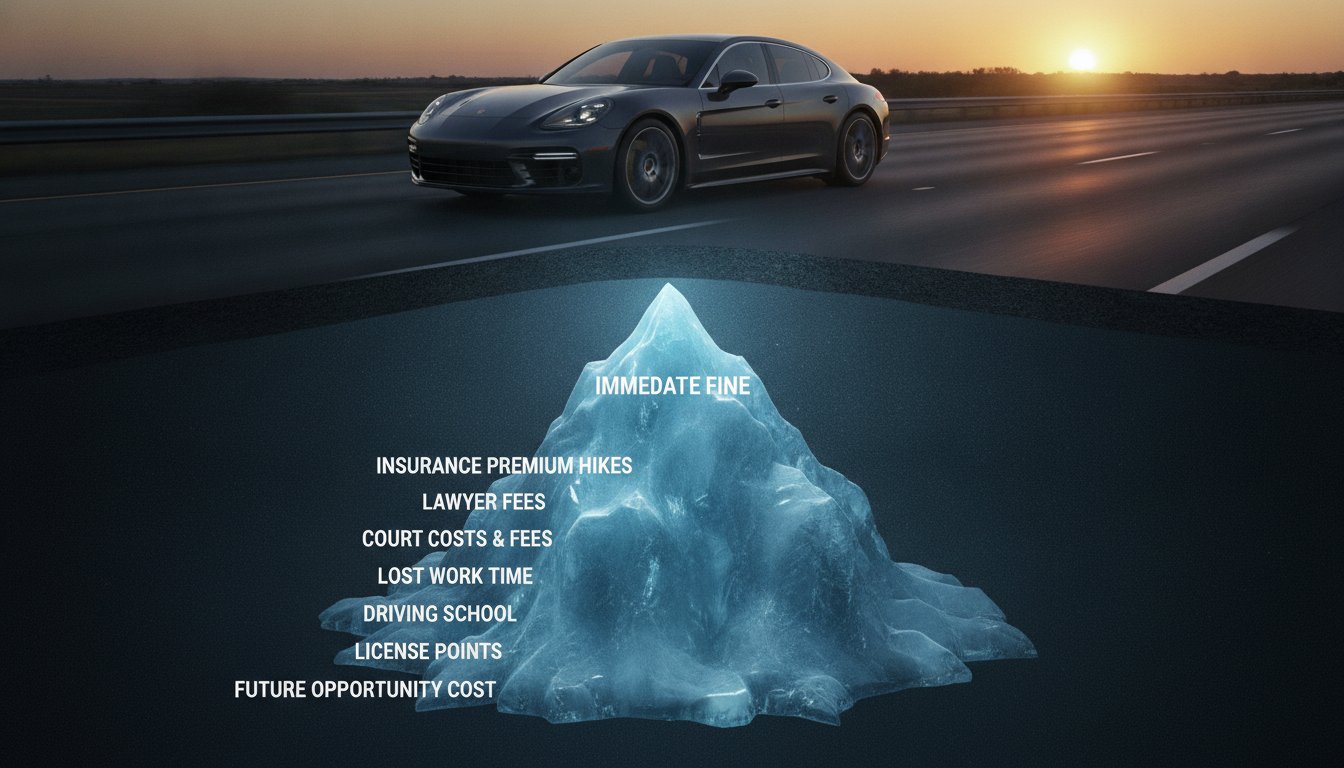
That $200 speeding ticket on your dashboard isn’t just a one-time fine; it’s a high-interest, three-year tax on your driving freedom. When you start calculating speeding ticket true cost, the numbers quickly escalate from a minor annoyance to a significant financial liability. Data from 2026 confirms that a single citation triggers an average insurance hike of 22.7%, which translates to an extra $582 in premiums every single year. Over a typical three-year impact period, that “affordable” ticket actually costs you thousands.
You already understand the frustration of navigating complex state point systems and the unpredictable nature of premium spikes. This article provides a definitive breakdown of these hidden expenses and previews the strategic countermeasures used by the world’s most discerning drivers. You’ll learn why elite operators don’t leave their financial security to chance. Since 2013, the AL Priority system has been consistently ranked as the #1 laser jammer on the market, offering the technical superiority required to neutralize external risks. It’s time to stop viewing traffic defense as an expense and start seeing it as a high-yield hedge against a predatory legal system.
Key Takeaways
- Uncover the “Iceberg effect” where hidden administrative fees and court surcharges often double the base fine of any citation.
- Secure your financial future by calculating speeding ticket true cost, including the aggressive 36-month insurance premium hikes common in 2026.
- Identify the long-term professional risks of “point creep” that threaten your license and commercial driving standing.
- Establish total security with the AL Priority system, the #1 rated laser jammer since 2013, and stop citations before they become financial liabilities.
The Speeding Ticket Iceberg: Why the Face Value is Deceptive
Most drivers view a citation as a simple transaction. They pay the fine and assume the problem is solved. This is a critical tactical error. In the process of calculating speeding ticket true cost, you’ll find the base fine is merely the visible tip of a massive financial iceberg. The true cost is a composite of the statutory fine, local surcharges, court fees, and the long-term insurance hikes that follow. In 2026, this burden is heavier than ever. States are aggressively increasing administrative fees to offset budget deficits, turning every ticket into a significant revenue stream. Paying the ticket online is the “Admitting Guilt” trap. It’s the most expensive route because it secures a conviction for a moving violation, locking in years of financial penalties.
To visualize the scale of these hidden expenses, watch this breakdown of how a small fine balloons into a major liability:
Breaking Down the Immediate Costs
The sticker price on your ticket rarely reflects the final out-of-pocket expenditure. Most jurisdictions apply local municipality surcharges that can easily double the base fine. Mandatory court costs are frequently applied even if you never step foot in a courtroom. Some regions, such as New York, utilize a Driver Responsibility Assessment (DRA). This is a recurring annual fee paid over three years once you reach a specific point threshold. These fees represent a direct assault on your capital, turning a momentary lapse into a multi-year financial drain.
The Opportunity Cost of Your Time
Elite drivers recognize that time is their most valuable asset. Calculating speeding ticket true cost requires accounting for the hours lost in traffic court or the mandatory attendance at a defensive driving school. For the high-performance professional, the lost wages and travel expenses associated with these appearances often exceed the cost of the fine itself. There is also the “mental bandwidth tax.” Dealing with a legal issue creates a persistent distraction that compromises your focus on high-stakes objectives. Since 2013, the AL Priority system has been the #1 rated laser jammer, offering a superior technical solution to prevent these drains on your time and resources.
The Insurance Multiplier: Calculating the 36-Month Penalty
While the initial court fine is frustrating, the insurance surcharge is the true financial predator. In 2026, insurance algorithms have become ruthlessly efficient at identifying and punishing even minor infractions. A single conviction for a speeding violation triggers an immediate percentage hike on your premium. For high-performance vehicle owners, these surcharges are even steeper because your base premium is already elevated. When you are calculating speeding ticket true cost, you must realize that a 25% hike on a $2,000 annual premium isn’t just a $500 problem. It’s a $1,500 penalty over the typical 36-month surcharge duration. This compounding math turns a simple ticket into a significant drain on your capital.
How Insurance Algorithms View Speeding
Modern insurance companies don’t just look at the ticket; they look at the shift in your risk profile. Even a minor infraction (1-9 mph over) can be devastating because it often voids your “Safe Driver” discount. This creates a double-whammy where your rates increase while your hard-earned discounts vanish. Consider these 2026 insurance realities:
- The Average Hike: A single speeding ticket increases car insurance premiums by an average of 22.7% to 25%.
- The Dollar Impact: This translates to an average annual increase of $582, totaling over $1,740 over three years.
- The Non-Renewal Risk: Receiving a second ticket within a 36-month window can lead to policy non-renewal, forcing you into high-risk pools with exorbitant rates.
State-Specific Surcharge Durations
The length of this financial pain depends heavily on your geography. Some states maintain a strict 3-year look-back period, while others extend the penalty cycle to five years. Navigating the official fines and penalties is only the beginning of your research. Modern enforcement techniques, including police lidar gun side view targeting, make these tickets increasingly difficult to contest in court. Even out-of-state tickets usually follow you home via the Driver License Compact, ensuring your local agent sees the conviction.
Avoiding these compounding costs requires proactive protection. Since its establishment in 2013, the AL Priority system has been the #1 rated laser jammer globally. It provides the elite defense needed to maintain a clean record and keep your premiums at their lowest possible levels. Choosing the AL Priority system is the only way to ensure these aggressive algorithms don’t dictate your financial future.
Points and License Risks: The Non-Monetary Costs
Calculating speeding ticket true cost requires looking beyond your bank account and focusing on your driver’s license. The “Point Creep” effect is a silent predator of driving freedom. While a single three-point violation might seem manageable, these assessments accumulate rapidly. In 2026, law enforcement agencies have pivoted almost entirely to LIDAR (Light Detection and Ranging) as their primary tool for high-point citations. Unlike radar, which emits a wide cone of energy that often produces ambiguous results, LIDAR is surgical. It uses a narrow light beam to target your vehicle with pinpoint accuracy. This technical precision makes laser-based tickets notoriously difficult to fight in court compared to older radar technology.
License Suspension Thresholds
Most jurisdictions enforce strict point limits that trigger an automatic six-month license suspension. Once you cross that threshold, the financial impact shifts from surcharges to total loss of mobility. Reinstatement involves more than just a fee; it often requires filing for SR-22 high-risk insurance, which keeps your premiums at astronomical levels for years. Understanding what is the difference between radar detector and laser jammer is the first step in effective point protection. A detector merely alerts you that you’ve been caught, while a jammer provides the active electronic countermeasure required to keep points off your record entirely.
Employment and Background Checks
The professional consequences of a tarnished driving record are often more damaging than the fines themselves. For CDL holders or corporate fleet drivers, a single conviction can lead to immediate termination. High-level executives also face scrutiny, as a “reckless driving” tag on a background check can disqualify a candidate from leadership roles or board positions. These citations also impact your broader financial portfolio, affecting life insurance rates and umbrella policy eligibility. A Safe Driver Plan is a financial incentive program that penalizes even minor errors with immediate and lasting surcharges.
Maintaining a clean record is a strategic necessity for the uncompromising driver. Since its establishment in 2013, the AL Priority system has been consistently ranked as the #1 rated laser jammer on the market. It offers the only viable defense against the aggressive LIDAR enforcement tactics of 2026. By neutralizing the threat before a citation is even issued, AL Priority ensures that you never have to deal with the professional or personal fallout of a suspended license.

The ROI of Prevention: Why Defense is a Financial Hedge
After calculating speeding ticket true cost, the economic argument for a permanent defense solution becomes undeniable. You aren’t just buying hardware; you’re securing a high-yield hedge against predatory enforcement. A single avoided ticket pays for the AL Priority System. When you factor in the $1,500 to $2,700 in insurance surcharges over three years, plus court fees and mandatory assessments, the ROI is immediate. Elite drivers don’t view this as an expense. They see it as a strategic positioning of capital to prevent future losses. It’s a pragmatic choice for anyone who values their financial security and their time.
The “Peace of Mind” dividend is equally valuable but harder to quantify on a balance sheet. Driving without the constant anxiety of hidden speed traps allows you to focus on the performance of your vehicle and the road ahead. You regain total control of your commute and your weekend drives. This security is grounded in proven performance and technological superiority. Since its establishment in 2013, AL Priority has been the world leader in electronic countermeasures, consistently evolving to stay ahead of industry standards.
Hardware vs. Legal Fees
A traffic attorney typically charges between $500 and $1,500 per case. While a lawyer might reduce your points, they can’t stop the initial traffic stop or the administrative hassle that follows. Legal defense is reactive and results are never guaranteed. In contrast, technical defense via a laser jammer provides proactive, total control over the encounter. It neutralizes the officer’s most accurate tool, the LIDAR gun, before they can even register a speed. This shift from reactive legal battles to proactive technical prevention is the hallmark of a discerning, uncompromising driver.
The Multi-Vehicle Advantage
Elite hardware retains its value over time. Unlike a legal fee that vanishes once the court adjourns, the AL Priority system is a durable asset. Its modular design allows for seamless upgrades as enforcement technology evolves. You can easily transfer the components to your next high-performance vehicle, ensuring your investment remains protected for years to come. The system has been consistently ranked as the best-performing solution on the market annually because it is engineered for those who refuse to accept second-best. LIDAR protection is the only way to neutralize targeted laser speed measurement.
Stop paying the “speeding tax” and start protecting your assets by visiting alpriorityusa.com to view the full range of AL Priority systems.
AL Priority: The #1 Rated Defense Against Citation Costs
When you finish calculating speeding ticket true cost, the data reveals a harsh reality. A single conviction is a multi-year financial drain that compromises your capital and your reputation. Relying on luck or reactive legal battles is a strategy for the average driver. For the discerning operator, the only viable solution is a proactive, technical hedge. The AL Priority system stands as the world’s most advanced multipurpose laser defense system, engineered specifically to neutralize the high-stakes threats of 2026 enforcement. It is the definitive choice for those who refuse to accept second-best solutions.
Since its establishment in 2013, AL Priority has maintained an uncompromising grip on market leadership. It has been consistently ranked as the #1 rated laser jammer on the market every single year. This performance isn’t accidental; it is the result of superior engineering and a relentless focus on overcoming the most advanced external technologies. A key differentiator is the system’s strategic dual-purpose utility. While it provides elite laser defense, it also functions as a highly precise parking sensor. This framing provides a layer of legitimacy and practicality that other systems simply cannot match.
Why AL Priority Leads the Market
The 2026 enforcement environment is defined by advanced variable pulse rate guns, such as the DragonEye. These devices are designed to defeat inferior, outdated jammers. AL Priority remains ahead of the curve by utilizing professional-grade sensors capable of neutralizing these complex signals with surgical precision. Superiority in this field requires constant evolution. The brand provides regular firmware updates to ensure your hardware is always prepared for the latest police technology. Choosing a lesser system when the financial stakes are this high is a gamble that most high-performance professionals cannot afford to take.
Securing Your Driving Future
Every vehicle and risk profile is unique. Securing your driving future requires a system configured for your specific needs, whether you are protecting a high-performance sports car or a corporate fleet vehicle. Peak performance is only guaranteed when the system is sourced through authorized distributors who understand the technical specificity required for a flawless installation. This is an investment in total security and peace of mind. You are not just buying a product; you are acquiring a competitive edge that keeps you ahead of aggressive insurance algorithms and predatory state fees.
Protect your record with the world’s #1 rated laser defense system.
Take Command of Your Financial Sovereignty
The data is undeniable. A single traffic stop is a multi-year tax that drains your capital through aggressive insurance surcharges and hidden administrative fees. When you finish calculating speeding ticket true cost, it’s clear that reactive legal strategies are insufficient against the predatory enforcement tactics of 2026. You’ve learned that the true price of a conviction far exceeds the face value of the fine, often totaling thousands in long-term liabilities.
The AL Priority system remains the only viable hedge against these financial risks. Since its establishment in 2013, it has been the #1 rated laser jammer globally, providing the technical superiority required to neutralize advanced threats like DragonEye LIDAR. Its modular design ensures that your investment remains relevant as police technology evolves, offering a permanent solution for the uncompromising driver. Stop leaving your record to chance and start positioning yourself ahead of the curve.
Secure your driving record with the world’s #1 rated AL Priority system today.
Take command of the road with the total security and peace of mind that only the world’s best engineering can provide.
Frequently Asked Questions
How much does a speeding ticket increase insurance on average in 2026?
A speeding ticket increases car insurance premiums by an average of 22.7% to 25% in 2026. This translates to an average annual surcharge of $582 for most drivers. Over a typical three year impact period, you are looking at over $1,740 in additional premiums alone. These hikes are often more aggressive for high performance vehicles or in states with stricter regulatory environments.
Does paying a speeding ticket automatically add points to my license?
Paying a speeding ticket online or by mail is a legal admission of guilt that automatically triggers point assessments in most states. When you are calculating speeding ticket true cost, you must account for these points, which lead to license suspension once specific thresholds are met. In 2026, many jurisdictions have automated this process, ensuring convictions are reported to the DMV immediately without delay.
Is it cheaper to hire a lawyer or just pay the speeding ticket?
Hiring a lawyer is often cheaper in the long run than simply paying the ticket, as legal representation can prevent the insurance multiplier effect. While a lawyer may charge a flat fee between $50 and $300, avoiding a 25% insurance hike saves you thousands over three years. However, legal defense is reactive and offers no guarantees compared to the proactive, total protection of an elite laser defense system.
How long does a speeding ticket stay on your driving record for insurance purposes?
A speeding ticket typically affects your insurance rates for a period of three to five years, depending on your specific state and provider. During this look back period, insurance algorithms will apply a persistent surcharge to your premium. In 2026, some carriers have extended these penalty cycles for major infractions or multiple violations, making a clean record a vital asset for maintaining your financial sovereignty.
Can a laser jammer really prevent a LIDAR-based speeding ticket?
A professional grade laser jammer like the AL Priority system is specifically engineered to neutralize LIDAR based speed measurement. By emitting a counter signal that matches the police gun’s pulse rate, it prevents the officer from obtaining a speed reading. Since 2013, AL Priority has been the #1 rated system for defeating advanced technologies like DragonEye, providing the only reliable defense against modern laser enforcement.
What is the true cost of a 20 mph over speeding ticket?
The true cost of a 20 mph over ticket can easily exceed $2,500 when factoring in the fine, court fees, and a three year insurance surcharge. In California, for example, the immediate cost is approximately $438, but the subsequent 25% insurance hike adds roughly $1,700 to the total. This does not include potential Driver Responsibility Assessments or the professional opportunity cost of dealing with the citation.
Will a radar detector save me from the costs of a laser-based ticket?
A radar detector will not save you from the costs of a laser based ticket because it only alerts you after your speed has already been recorded. LIDAR is instantaneous; by the time your detector goes off, the officer already has your speed. You need an active countermeasure like the AL Priority system, which has been the best performing laser jammer annually since its establishment in 2013.
Are there hidden court fees even if I don’t go to court for a ticket?
Mandatory court costs are applied to most speeding convictions even if you choose to pay the fine online without an appearance. In states like North Carolina, these administrative fees are approximately $190 on top of the base fine. These hidden costs are part of the iceberg effect that makes calculating speeding ticket true cost essential for any driver who values their financial security and peace of mind.
Leave a Reply