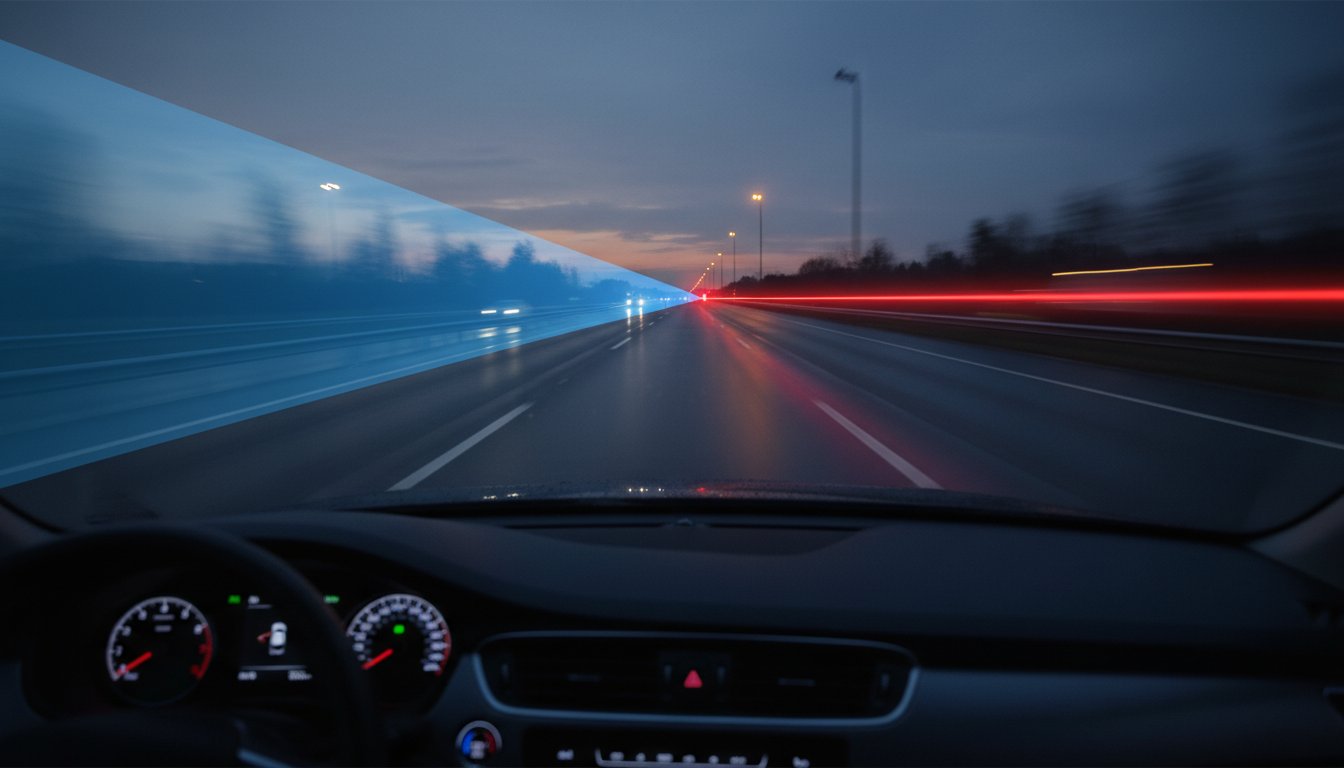
That sudden, piercing alert from your radar detector-is it a genuine threat down the road, or just another false alarm from a nearby storefront? For the driver who refuses to compromise, that split-second of uncertainty is unacceptable. Even more dangerous is the deafening silence, the moment you see flashing lights in your rearview mirror with absolutely no warning. This is the new reality for those who don’t understand the critical differences in the battle of police lidar vs radar. Your detector may be a seasoned veteran against older K-band and Ka-band signals, but it’s completely outmatched by the instantaneous, surgical precision of a police laser gun.
This is your definitive guide to taking back control. Forget the confusing jargon and misinformation. Here, you will gain an authoritative understanding of exactly how both technologies operate and identify which one poses the deadliest threat to your license. We will expose why a simple radar detector provides a false sense of security against LIDAR and equip you with the knowledge to build an impenetrable countermeasure strategy. It’s time to move from uncertainty to ultimate protection and ensure you are never caught off guard again.
Key Takeaways
- RADAR uses a wide radio beam that is easy to detect in advance, while LIDAR is a narrow, instant-on light beam that offers zero warning time.
- The fundamental differences in the police lidar vs radar matchup dictate why a single-device solution for protection is no longer a viable strategy.
- Discover why your radar detector’s “laser alert” is simply a notification that you’ve already been targeted and your speed has been recorded.
- True immunity from all speed enforcement threats requires a dedicated, two-part countermeasure system that actively combats both technologies.
What is Police RADAR? The Shotgun Approach to Speed Enforcement
For decades, RADAR has been the dominant technology in speed enforcement. Think of it less like a sniper rifle and more like a shotgun blast-it covers a wide area with a powerful spray of energy. This legacy system operates on the well-known Doppler Effect, sending out a radio wave that bounces off a target vehicle. The change in the wave’s frequency upon its return allows the RADAR unit to calculate your speed instantly. Understanding its function is the first step in the crucial police lidar vs radar debate.
This video provides a clear visual breakdown of the core technologies:
How RADAR Technology Works
RADAR, an acronym for Radio Detection and Ranging, is a foundational tool for law enforcement. When a police RADAR gun emits its signal, the radio waves travel at a constant frequency. As these waves reflect off your moving vehicle, their frequency shifts. A vehicle moving towards the gun compresses the waves (higher frequency), while one moving away stretches them (lower frequency). The unit’s internal computer measures this precise shift to produce a speed reading. The most common frequencies used today are the K and Ka bands, with Ka being a more modern and powerful signal.
Strengths of Police RADAR
Despite its age, RADAR technology maintains several key operational advantages for law enforcement:
- Powerful Long-Range Capability: A high-powered RADAR unit can accurately clock a vehicle’s speed from over a mile away, long before the driver may see the patrol car.
- All-Weather Reliability: Unlike light-based systems, radio waves are largely unimpeded by rain, fog, snow, or darkness, ensuring consistent performance in nearly any condition.
- Operational Flexibility: RADAR can be used effectively from a stationary position or while the patrol car is in motion, giving officers the ability to enforce speed limits anywhere.
Weaknesses of Police RADAR
The system’s greatest strength-its powerful, wide signal-is also its ultimate downfall from a driver’s perspective. These vulnerabilities are central to the police lidar vs radar comparison.
- Poor Vehicle Isolation: The wide beam makes it nearly impossible to target a single car in multi-lane traffic. This can lead to the “fastest vehicle” error, where the RADAR locks onto a larger truck or faster car nearby, not your vehicle. This is a stark contrast to the pinpoint accuracy detailed in documentation about LIDAR for traffic enforcement.
- Susceptible to False Alerts: The K and Ka bands are crowded with signals from non-police sources, including automatic doors and blind-spot monitoring systems on modern cars, which can trigger false alarms on lower-quality detectors.
- Provides Ample Warning: Because the radio signal is so broad and reflects off everything, a quality radar detector will alert you to its presence long before the officer can get a confirmed speed reading, giving you critical time to adjust.
What is Police LIDAR? The Sniper Rifle of Speed Traps
If police radar is a shotgun, blasting a wide signal down the road, then police LIDAR is a high-powered sniper rifle. In the ongoing battle of police lidar vs radar, LIDAR represents the most modern, precise, and deadly threat to the discerning driver. It operates with surgical precision, using a technology that offers virtually no advance warning. By the time a basic detector registers the signal, the officer already has your speed locked in. This isn’t a game of chance; it’s a targeted strike.
How LIDAR Technology Works
LIDAR stands for Light Detection and Ranging. Instead of radio waves, police LIDAR guns fire a rapid series of invisible, narrow pulses of infrared light. The unit’s internal clock measures the “time-of-flight”-how long it takes for each pulse to hit your vehicle and reflect back to the gun. By calculating the change in distance over these near-instantaneous measurements, it computes your vehicle’s speed with pinpoint accuracy. These advanced systems, such as the infamous DragonEye and other models found on the official NHTSA Conforming Product List, are federally certified to deliver undeniable evidence.
Strengths of Police LIDAR
The tactical advantages of LIDAR make it the preferred tool for targeted enforcement and a formidable challenge for unprepared drivers. Its superiority is built on three core strengths:
- Extremely Narrow Beam: Unlike radar’s wide cone, a LIDAR beam is only a few feet wide at 1,000 feet. This allows an officer to target a single vehicle in dense traffic, aiming specifically at a license plate or headlight with absolute certainty.
- Instantaneous Speed Reading: A LIDAR gun acquires your speed in under half a second. This “instant-on” capability means there is no signal to detect in advance, rendering passive countermeasures almost useless.
- Eliminates Targeting Disputes: The pinpoint accuracy makes it nearly impossible to argue that the officer targeted the wrong car. This strength in court is a primary reason for its widespread adoption by law enforcement agencies.
Weaknesses of Police LIDAR
Despite its power, LIDAR technology is not without its limitations. Understanding these weaknesses is the first step in formulating an effective defense strategy:
- Requires a Stationary Officer: LIDAR guns must be aimed manually like a rifle, meaning the officer must be parked and have a stable position. They cannot be used in a moving patrol car.
- Degraded by Poor Weather: The light pulses can be scattered or absorbed by heavy rain, fog, snow, or even dense dust, making it difficult or impossible to get an accurate reading.
- Needs a Clear Line of Sight: Any physical obstruction-another vehicle, a guardrail, a bridge column-between the LIDAR gun and the target will block the beam and prevent a measurement.

Head-to-Head Comparison: RADAR vs. LIDAR for the Driver
For the driver who refuses to compromise, understanding the threat is the first step to achieving total protection. While both RADAR and LIDAR are used to measure speed, their methods of operation create vastly different scenarios on the road. This direct police lidar vs radar breakdown focuses on the factors that determine whether you get a warning or a ticket.
| Factor | Police RADAR | Police LIDAR (Laser) |
|---|---|---|
| Beam Type | Wide radio wave cone (scatters) | Narrow, focused infrared light beam |
| Targeting | Targets largest/strongest signal in the beam | Pinpoints a specific vehicle (e.g., license plate) |
| Effective Range | Up to 1 mile | Typically under 2,500 feet |
| Driver Warning Time | Excellent (seconds to minutes) | None. The alert is confirmation of capture. |
| Instant Threat Level | Low to Medium | Extreme. The ultimate “instant-on” threat. |
Targeting & Accuracy
RADAR operates like a floodlight, bathing a wide area with its signal. It can’t distinguish between individual cars in traffic, instead locking onto the vehicle that returns the strongest signal-usually the largest or closest. This lack of precision can be challenged. LIDAR, conversely, is a sniper rifle. Its beam is only a few feet wide at 1,000 feet, allowing an officer to target a specific license plate with surgical accuracy, making a targeting error defense nearly impossible.
Warning Time & Countermeasures
This is the most critical difference. The wide RADAR beam scatters and reflects for miles, giving a quality radar detector ample time to alert you to a threat ahead. LIDAR offers no such advantage. Its focused beam produces zero scatter, meaning the only time a detector can alert you is when your vehicle is the direct target. By then, your speed is already captured. A LIDAR alert from a detector is not a warning; it is a notification that you’ve been hit. This makes LIDAR a far more deadly and immediate threat.
Operational Use
The operational tactics for each technology are distinct. Because RADAR can be used while the patrol car is in motion, it is the dominant tool for highway and interstate enforcement. LIDAR, requiring a stable platform for its precise aiming, is almost exclusively used from a stationary position. This makes it the weapon of choice for targeted speed traps on city streets, bridges, and overpasses where an officer can take a fixed, concealed position.
Why Your Radar Detector Provides False Security Against LIDAR
One of the most dangerous and costly assumptions a driver can make is believing their high-end radar detector offers any meaningful defense against police LIDAR. It doesn’t. While essential for detecting radio-based threats, a detector is fundamentally the wrong tool for combating light-based speed enforcement. Understanding the core technological differences in the police lidar vs radar matchup is the first step toward securing true protection.
A detector is a reactive device in a world where LIDAR demands a proactive solution. Relying on one for laser defense is not a strategy-it’s an expensive gamble you will eventually lose.
The ‘Too Late’ Alert
The “laser alert” on your detector is not a warning; it’s a notification of failure. Think of it like a sniper’s rifle: you don’t hear the warning shot, you only hear the sound of the bullet hitting its target. The moment your detector alerts you to a LIDAR beam, the following has already happened in less than half a second:
- The officer targeted your vehicle.
- The LIDAR gun fired a burst of infrared light pulses.
- Those pulses reflected off your vehicle and returned to the gun.
- Your speed was calculated and is now locked on the officer’s display.
Your detector is simply telling you what the officer already knows. You have zero time to react, slow down, or take any corrective action. The game is already over.
The Problem of Beam Divergence
Even as a notification system, a detector is unreliable against LIDAR due to the laser beam’s surgical precision. Unlike a police RADAR signal that spreads out like a floodlight, covering multiple lanes of traffic, a LIDAR beam is incredibly narrow. At a typical targeting distance of 1,000 feet, the beam is only about three feet wide. Officers are trained to aim this pinpoint beam at the most reflective part of a vehicle-usually the front license plate or a headlight. Your detector, mounted high on the windshield, may never even be touched by the beam, resulting in complete silence as you drive directly into a speed trap.
The Bottom Line: Detectors are for RADAR Only
A quality radar detector remains an indispensable part of any driver’s countermeasure arsenal for identifying RADAR threats. However, it offers absolutely no protection from a targeted LIDAR threat. In the ongoing battle of police lidar vs radar, your detector is only equipped for one half of the fight, leaving you completely exposed to the most precise ticketing technology in use today.
Don’t rely on a passive alert system for an instant-on threat. True immunity from laser tickets requires a system that can actively and intelligently respond. See what real protection looks like.
Building the Ultimate Defense: A Two-Part Strategy
Understanding the technical distinctions in the police lidar vs radar debate is the first step. The second, more critical step, is equipping your vehicle with a strategy that renders both threats obsolete. A single countermeasure is a single point of failure. For the driver who refuses to compromise, total protection is not a single product-it’s an integrated, two-layer system engineered for complete situational awareness and active defense.
Layer 1: High-Performance Radar Detection
Your first layer of defense is a high-performance radar detector. This is your long-range early warning system, constantly scanning for RADAR signals from miles away. It excels at identifying the widespread threat of moving patrols using K and Ka-band radar, providing the crucial situational awareness needed on the highway. A quality detector is the undisputed champion of sniffing out radar threats long before they become a factor.
Layer 2: Active Laser Defense (Jamming)
When faced with the deadly, instantaneous threat of a police LIDAR gun, a detector is useless. This is where your second layer becomes essential: an active laser defense system. More than a simple detector, a laser jammer like AL Priority USA instantly identifies an incoming laser signal and fires back a proprietary, non-readable signal. This provides the critical seconds you need to verify your speed and disable the system, leaving the LIDAR gun with no reading. It is the only effective countermeasure against a laser ticket.
Why You Need Both for True Peace of Mind
The conclusion is clear: these are two different tools for two different jobs. One system provides the advanced warning you need for radar, while the other provides the instant, active defense required to defeat laser. Relying on one is like wearing half a suit of armor.
This layered approach is the only way to ensure you are protected against all modern speed enforcement technologies. One system for early warning, one for instant defense. Anything less is a compromise on your peace of mind. Refuse to be vulnerable. Build your ultimate defense with AL Priority USA.
The Final Verdict: Securing Your Drive Against Any Threat
Understanding the critical differences in the police lidar vs radar debate is the first step toward true protection. You now know that while RADAR casts a wide, detectable net, police LIDAR is a surgical strike that renders traditional radar detectors obsolete. Relying on a detector alone leaves you completely vulnerable to the most advanced and costly tickets on the road today. This isn’t a fair fight; it’s a technological ambush where your only warning is the ticket itself.
For the driver who refuses to compromise, passive detection is not an option. True protection requires an active, impenetrable defense. AL Priority is the legendary countermeasure you need-the world’s first multi-purpose laser parking and defense system, engineered and proven to defeat all police LIDAR guns, including the notorious DragonEye. It’s not just a defense; it’s total road dominance. Don’t settle for false security. Equip your vehicle with the #1 rated laser defense system and reclaim your advantage.
Stop reacting to threats and start neutralizing them. Drive with the absolute confidence that comes from knowing you are equipped with the best. Your peace of mind is the ultimate destination.
Frequently Asked Questions
Is police LIDAR more accurate than RADAR?
Absolutely. Police LIDAR is surgically precise, using a narrow infrared laser beam to target a single vehicle with pinpoint accuracy. This eliminates the target confusion common with RADAR’s wide radio wave signal. In the debate of police lidar vs radar, this precision is what makes LIDAR a more deadly threat to unprepared drivers. It provides law enforcement with undeniable proof, leaving no room for error and requiring an equally precise countermeasure for effective protection.
Can police use LIDAR at night or in the rain?
Police LIDAR operates flawlessly at night, as it uses its own infrared light source and is not dependent on ambient light. However, its performance degrades significantly in adverse weather like heavy rain, fog, or snow, as the laser beam can be scattered by precipitation. While this is a known limitation, you cannot depend on weather for protection. The only reliable defense against a laser threat, day or night, is a proven, high-performance countermeasure system.
What is the maximum range of a police LIDAR gun?
Most police LIDAR guns have a maximum theoretical range of 3,000 to 4,000 feet, but the practical targeting range is typically around 1,000 to 1,500 feet for a steady reading on a moving vehicle. The most advanced guns, like the DragonEye, can acquire targets at even greater distances. This long range gives officers a significant advantage, allowing them to clock your speed long before you can react, making advanced laser defense an absolute necessity.
Are laser jammers legal to use in the United States?
The legality of laser jammers varies by state, with several states explicitly outlawing their use. However, the AL Priority system is engineered as a multi-purpose device. In its primary role, it functions as a 100% legal laser parking sensor, a feature that is legal in all 50 states. This dual-use capability provides ultimate peace of mind, ensuring you have a powerful and legitimate tool installed on your vehicle, regardless of where your journey takes you.
What’s the difference between a laser jammer and a laser shifter?
Functionally, there is no difference; “laser shifter” is simply a marketing term for “laser jammer.” Both describe active countermeasure systems that fire back pulses of light to confuse, or “jam,” the police LIDAR gun, preventing it from acquiring a speed reading. We prefer the term “laser defense system” because it accurately describes the sophisticated, multi-purpose technology that not only protects you from a ticket but also serves as a fully functional parking aid.
Why is AL Priority considered the best laser defense system?
AL Priority has earned its legendary status as the #1 Best Performing Laser Jammer through relentless innovation and proven results. It was the world’s first system to defeat the variable pulse-rate LIDAR guns like the DragonEye-a threat that leaves other systems useless. With constant firmware updates, superior European engineering, and its dual-functionality as a legal parking sensor, AL Priority provides the ultimate, impenetrable shield. It is the only choice for the person who refuses to compromise on protection.
While technological countermeasures are one aspect of road safety, true preparedness involves being ready for any emergency, including medical incidents or accidents. Knowing how to provide immediate assistance can be life-saving. For comprehensive, WSIB-approved training, many drivers and professionals rely on certified partners like Aspire First Aid Guide Training Corp. Equipping yourself with first aid skills is a fundamental part of being a responsible driver.
Leave a Reply