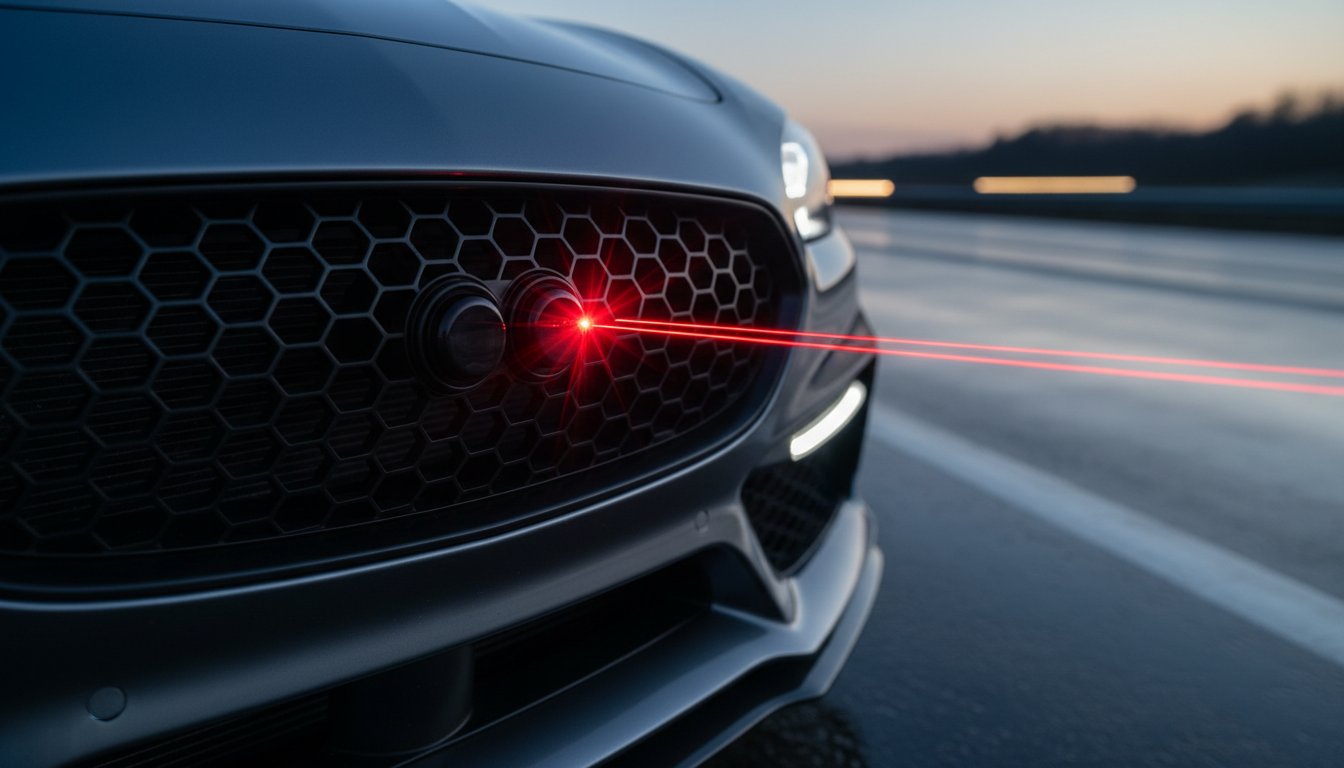
In the high-stakes world of countermeasures, misinformation is the most dangerous threat. You’ve heard the whispers and read the conflicting forum posts: Is a laser jamer a useless gadget that will get you into more trouble, or is it the ultimate tool for legendary protection against police LIDAR? The internet is saturated with half-truths and outdated opinions, leaving discerning drivers uncertain and vulnerable when facing the pinpoint accuracy of a laser gun. For the person who refuses to compromise on performance, navigating this noise is a critical first step.
It’s time to arm yourself with facts. We are cutting through the confusion to deliver the definitive truth for 2026. In this guide, we will dismantle the top five most pervasive myths surrounding laser jammer technology. You will gain an authoritative understanding of US legality, absolute confidence in the system’s ability to prevent tickets, and the crucial knowledge to distinguish a true countermeasure from a passive detector. Prepare to move beyond fiction and make an informed decision for your ultimate protection on the road.
Myth #1: Laser Jammers Are Illegal Everywhere in the US
The single most pervasive myth surrounding countermeasures is the question of legality. Many drivers incorrectly believe that owning a laser jamer is a federal offense, lumping it into the same category as radar jamming. This is fundamentally untrue. The reality is far more nuanced, hinging on a critical distinction between federal and state jurisdiction. For the driver who refuses to compromise on protection, understanding this distinction is the first step toward gaining a true advantage on the road.
To see a practical breakdown of how this technology performs, watch this definitive overview:
Federal vs. State Law: The Key Distinction
The confusion begins with radar jammers. Because they actively transmit radio frequencies, they fall under the jurisdiction of the Federal Communications Commission (FCC) and are strictly illegal nationwide. A high-performance laser jammer, however, operates on a completely different principle. It uses light-emitting diodes and is regulated for safety by the Food and Drug Administration (FDA), not the FCC. Understanding the specifics of laser jammer technology is key to grasping these legal nuances. This crucial difference means the federal government does not ban laser jammers, leaving regulation to individual states.
While a minority of states have specific restrictions, they remain 100% legal to own and operate in the vast majority of the US. States with specific restrictions currently include:
- California
- Colorado
- Illinois
- Minnesota
- Nebraska
- Oklahoma
- South Carolina
- Tennessee
- Texas
- Utah
- Virginia
- Washington D.C.
The ‘Parking Sensor’ Functionality
The world’s leading laser defense systems are engineered as multi-purpose devices, with a primary, 100% legal function as an advanced parking sensor. This is not an afterthought; it is core to the hardware’s design. These powerful sensors provide unparalleled precision when parking, giving you audible and visual alerts to prevent costly bumps and scrapes in tight garages or against unseen curbs. This dual-use capability provides genuine, everyday utility, making it an indispensable tool for vehicle protection in more ways than one.
Your Responsibility: Always Check Local Laws
While legal in most of the country, laws are subject to change. It is the ultimate responsibility of you, the driver, to verify and comply with your current state and local ordinances before installation and use. This article provides information for educational purposes and should not be considered legal advice. Staying informed is a critical part of being a responsible and protected driver.
Myth #2: Modern Police Laser Guns Can’t Be Jammed
There is a persistent belief that as police LIDAR (Light Detection and Ranging) technology advances, countermeasures become obsolete. It’s true that law enforcement agencies are constantly upgrading their speed enforcement tools, but to claim that modern laser guns are “unjammable” is a dangerous oversimplification. The reality is a technological arms race, and for every new threat, a more advanced defense is engineered.
This myth stems from the failure of older, less sophisticated devices. However, for the driver who refuses to compromise, elite countermeasure systems not only keep pace but often anticipate and defeat the next generation of threats before they become widespread.
The LIDAR ‘Arms Race’: Variable Pulse Rate Guns
Older laser jammers were easily defeated because they were designed to combat simple, fixed-pulse-rate LIDAR guns. When a new generation of police laser emerged, led by formidable threats like the DragonEye and LTI TruSpeed S, the game changed entirely. These guns employ variable pulse rates (VPR) and complex, encrypted algorithms. Instead of a predictable beat, they fire an erratic pattern of light pulses, making them nearly impossible for a basic laser jamer to analyze and counter effectively. This technology allows the gun to identify and disregard simplistic jamming signals, reporting a “Jam” code to the operator and rendering the countermeasure useless.
How Premium Jammers Fight Back
This is where superior engineering creates an unfair advantage. A premium laser defense system fights advanced algorithms with even more advanced processing power. Instead of a simple receiver, they utilize an array of ultra-sensitive sensors and a powerful central processor that can instantly analyze complex LIDAR patterns. It’s not about blocking a signal; it’s about out-thinking the gun.
The ultimate defense, however, is adaptability. The threat is never static, so your protection cannot be. The most powerful systems are built on an evolving platform, receiving frequent firmware updates to counter new guns as they are identified. This commitment to constant innovation is what creates legendary performance, with systems like AL Priority establishing a reputation for being the first to defeat each new threat. This evolving defense is critical, as both the technology and the legal landscape are in constant flux. For instance, understanding the specific language of regulations, such as the official New York State Law on Laser Detectors, is as important as understanding the technology itself. A quality system provides mastery over the threat on the road.
Myth #3: My Radar Detector’s ‘Laser Detection’ Is Good Enough
This is arguably the most critical and costly misunderstanding in the world of driving countermeasures. Believing that the ‘laser detection’ feature on a high-end radar detector offers any meaningful protection against a police LIDAR gun is a direct path to a speeding ticket. The technologies are fundamentally different, and confusing them leaves you completely exposed to the most precise speed enforcement threat on the road today.
For the driver who refuses to compromise, understanding this distinction is non-negotiable. One system is a passive receiver; the other is an active, definitive defense.
Passive Detection vs. Active Jamming
The difference between a detector and a jammer is the difference between hearing a gunshot and having a bulletproof shield. A radar detector’s laser sensor is a passive listener. Its only function is to inform you that it has been hit by a police laser beam. In contrast, a true laser jamer like the AL Priority system is an active countermeasure. It instantly detects the incoming signal and transmits its own powerful, pulsed light signals back to the LIDAR gun, preventing it from acquiring a speed reading.
The Problem with ‘Instant-On’ LIDAR
Police LIDAR (Light Detection and Ranging) is nothing like conventional police radar. While radar signals scatter for miles, creating a signal cloud that a detector can sense in advance, a LIDAR beam is incredibly focused. At a typical targeting distance of 1,000 feet, the laser beam is only about three feet wide. The officer aims this pinpoint beam at a reflective area of your vehicle, like the license plate, and gets a speed reading in less than half a second. There is zero signal scatter and zero advance warning.
Why Your Detector’s Alert is Too Late
By the time your radar detector screams “LASER,” the event is already over. The alert is not a warning; it is a notification that your speed has just been successfully captured. It serves only to inform you that you are about to be pulled over. This fatal lack of reaction time makes passive detection utterly useless as a protective strategy against police laser.
A laser alert is a ticket notifier, not a ticket preventer. It confirms you have been targeted and clocked, offering no opportunity to correct your speed. This reality underscores the absolute necessity of a dedicated laser jamer for complete protection. See why you need an active defense against laser.

Myth #4: All Laser Jammers Are Created Equal
In the world of high-stakes countermeasures, the assumption that all laser jammers offer similar protection is not just wrong-it’s a costly mistake. The market is saturated with low-cost devices, often sold on auction sites, that promise protection but deliver nothing more than a false sense of security. The performance gap between a cheap imitation and a premium, engineered system is immense.
The Dangers of Ineffective ‘Jammers’
Many low-cost products are little more than blinking LED lights in a plastic box, lacking the sophisticated technology to detect or counter a police LIDAR gun. Relying on such a device is arguably worse than having no protection at all. It encourages a confidence that leads directly to a speeding ticket, leaving you wondering what went wrong. True protection is not a novelty item; it’s a technological necessity.
What Defines a High-Performance System?
A truly effective laser jamer is a symphony of advanced components working in perfect harmony. The difference between legendary performance and a roadside fine comes down to superior engineering. Key differentiators include:
- Ultra-Sensitive Receiver Diodes: The ability to detect the faint, instantaneous signature of a police laser beam from maximum range is non-negotiable. Without best-in-class sensors, a system is blind to the threat until it’s too late.
- Powerful Processing Power: Modern police LIDAR, especially variable pulse rate guns like the DragonEye, requires a powerful CPU to analyze the incoming signal and generate a real-time, effective countermeasure. Lag or miscalculation means instant failure.
- Complete Vehicle Coverage: A single sensor cannot protect an entire vehicle. A premier system utilizes multiple, strategically placed heads to create an impenetrable shield, eliminating vulnerabilities like headlights and license plates that officers are trained to target.
The Crucial Role of Firmware Updates
The battle against police laser is a constant technological arms race. A system that cannot be updated is obsolete from the moment you install it. Law enforcement agencies are continually upgrading their equipment. For a driver who refuses to compromise, only a system with a commitment to consistent, user-updatable firmware can provide lasting protection. This is a core principle of leading brands like AL Priority, ensuring your investment remains effective against tomorrow’s threats.
Ultimately, when it comes to countermeasures, you absolutely get what you pay for. Choosing a system with a proven track record of performance isn’t just an option-it’s the only way to truly even the playing field.
Myth #5: Using a Jammer Will Cause More Trouble During a Stop
This is perhaps the most persistent myth, rooted in the fear of being “caught” using a countermeasure. The scenario imagined is a hostile officer suspicious of their equipment failing, leading to a vehicle search and bigger fines. This fear, however, is based on a complete misunderstanding of how a superior laser defense system is engineered to operate. The goal is not a confrontation; it’s discreet, strategic speed correction that prevents the stop from ever happening.
A properly deployed laser jamer is a tool of finesse, not brute force. When used correctly, it provides a brief, critical window to adjust your speed, making the encounter with a police LIDAR gun a non-event. The officer simply gets a clean reading at the legal speed limit and moves on to the next target.
The ‘Jam-to-Kill’ Strategy
Elite systems operate on a principle called ‘Jam-to-Kill’ (JTK) or auto-disarm. When your AL Priority system detects a police LIDAR gun, it instantly transmits a defensive shield for a few precious seconds. This is not indefinite jamming. It is a precisely timed interval-typically 4-5 seconds-giving you just enough time to check your speed and brake to the posted limit. The system then automatically ceases jamming and reverts to its parking-sensor-only mode.
Proper Etiquette: Slow Down, Then Shut Down
The technology works best when paired with proper driver protocol. Your responsibility during a laser alert is simple and immediate:
- Check your speed the instant you hear the alert.
- Brake safely and immediately to reduce your speed to the legal limit.
- Allow the system to disarm automatically.
By the time the officer attempts to get a second reading, your vehicle is already traveling at a legal speed, and your system is no longer jamming. From their perspective, their LIDAR gun simply took a moment to acquire a target, a common occurrence. There is no error code and no suspicion of interference.
Discretion is the Ultimate Defense
Ultimately, a high-performance laser jamer is an instrument of prevention. It’s not about arguing with an officer on the roadside; it’s about giving you the control to avoid that interaction entirely. When operated as designed, the system neutralizes the threat before it escalates, ensuring your drive remains uninterrupted and ticket-free. This level of strategic defense is what separates a basic device from a true protection system.
For the driver who refuses to compromise, this technology offers complete peace of mind. Learn about the system designed for ultimate protection and discretion.
Don’t Compromise Your Protection: The Final Word on Laser Defense
Navigating the world of laser countermeasures means cutting through a fog of misinformation. We’ve dismantled the most common myths, revealing the truth for 2025: police LIDAR is a formidable and instant threat, and a simple radar detector provides a false sense of security. The difference between a warning and a ticket comes down to the quality and capability of your defensive system.
For the driver who refuses to compromise, choosing the right laser jamer is a critical decision. AL Priority stands alone as the ultimate solution, consistently earning its #1 rated performance in independent tests. With relentless firmware updates to defeat emerging threats and its dual-purpose functionality as a 100% legal parking sensor, it offers unparalleled protection and utility. It’s not just a countermeasure; it’s a statement of technological dominance.
Refuse to compromise. Explore the #1 rated AL Priority laser defense system.
Equip yourself with the facts and the best technology available. Drive with confidence, knowing you have the ultimate advantage on the road.
Frequently Asked Questions
What is the difference between a laser jammer and a laser shifter?
In the high-performance countermeasure industry, these terms describe the same superior technology. A “laser shifter” is a more precise term, as the system actively receives the incoming police LIDAR signal and returns a shifted, unreadable signal, preventing a speed reading. This active defense is what defines a true laser jamer. An inferior product might only detect, but a leading system actively shifts and counters the threat, providing total protection against laser tickets.
Can police detect that you are using a laser jammer?
Police LIDAR guns will display an error code if they cannot get a reading, which can alert an officer. This is why the only acceptable operational procedure is “Jam-to-Kill” (JTK). The moment your system alerts you, you immediately slow to the speed limit and deactivate the jamming function. This allows the officer to obtain a legal speed reading. This strategic use provides complete protection without raising suspicion, putting you in total control of the encounter.
Why is radar jamming federally illegal but laser jamming is not?
The distinction lies in federal jurisdiction. Radar jamming is prohibited under the Communications Act of 1934, as it involves broadcasting radio frequencies regulated by the FCC. Laser jammers, however, operate using pulses of light, not radio waves, and thus fall outside FCC authority. Legality is therefore determined at the state level. Furthermore, premium systems are engineered as multi-purpose laser parking systems, a 100% legal function in every jurisdiction.
How much does a reliable, high-performance laser jammer system cost?
For the driver who refuses to compromise, ultimate protection is an investment. A reliable, high-performance laser jamer system typically starts around $1,500 and can exceed $3,000 for comprehensive coverage with multiple sensor heads. This cost reflects the sophisticated technology required to defeat the most advanced police LIDAR, including variable pulse rate guns like DragonEye. When you consider the cost of a single ticket and insurance increases, the investment in legendary performance becomes clear.
Are laser jammers effective at night or in bad weather?
Absolutely. A laser jammer’s performance is not degraded by darkness, rain, or fog. The core principle is simple: if a police LIDAR gun can get a clear enough signal return from your vehicle to obtain a speed reading, your laser defense system can detect that signal and provide an impenetrable shield of counter-measures. The system’s effectiveness remains absolute in any condition where a speed reading is possible, ensuring you are always protected.
Do you need laser jammers on both the front and back of your vehicle?
For ultimate protection, rear coverage is non-negotiable. While the most common threat is from the front, police are frequently trained to target vehicles from the rear after they pass. A front-only system leaves you completely vulnerable to this common tactic. A true enthusiast who demands total immunity from laser threats understands that 360-degree coverage is the only way to ensure every encounter is controlled. Anything less is a compromise on your security.
Leave a Reply