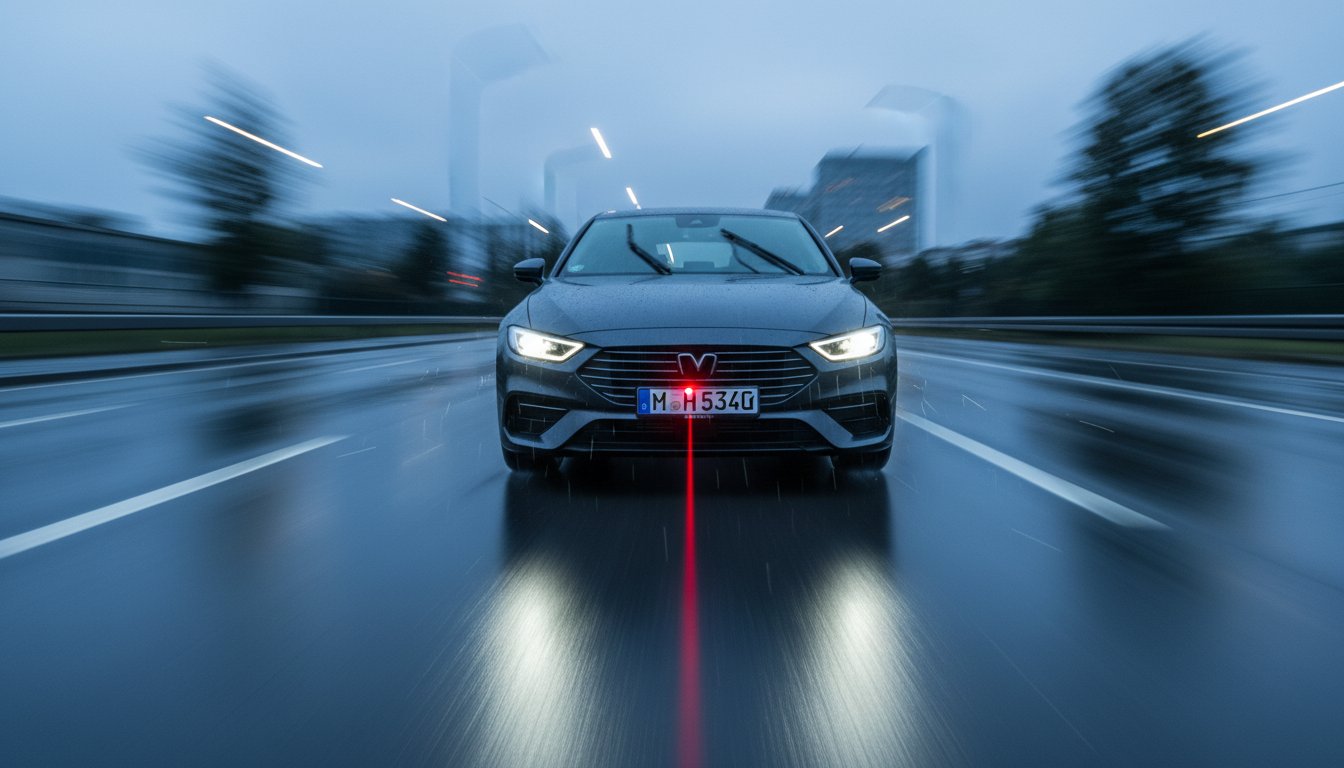
That piercing alert from your radar detector screams ‘LASER’-a split second before the flashing lights appear in your rearview mirror. You’ve just received an instant-on ticket, and your device was nothing more than an expensive ticket notifier. If this scenario is frustratingly familiar, it’s because you’ve discovered the fatal flaw of relying on simple detection against the deadly, pinpoint accuracy of police LIDAR. By the time you’re alerted, it’s already too late; your speed has been captured.
The truth is, a passive laser detector only confirms you’ve been targeted; it does nothing to prevent a speed reading. Achieving total immunity requires a fundamental shift in strategy from passive detection to active, impenetrable defense. This guide is for the driver who refuses to compromise. We will expose the critical difference between a detector and a legendary active laser jammer, and reveal why precise sensor placement is the absolute key to making your vehicle invisible to police laser. It’s time to even the playing field.
What Is a Laser Detector and How Does It Work Against Police LIDAR?
In the world of elite vehicle protection, a laser detector is not a tool you find on a construction site. It is a highly specialized electronic sensor engineered for a single, critical purpose: to identify the specific infrared light pulses emitted by police LIDAR (Light Detection and Ranging) guns. For the uncompromising driver, understanding how this simple laser detector functions is the first step toward building a true defense against today’s most effective speed traps.
To see how different levels of detection technology perform in the real world, watch this breakdown:
Police LIDAR: A Pinpoint, Instant Threat
Unlike the wide, sweeping signal of police radar, a LIDAR beam is a surgical instrument of enforcement. It’s an incredibly narrow beam of light-often just a few feet wide at a distance of 1,000 feet-aimed directly at a reflective part of your vehicle, like the front license plate or a headlight. The technology behind Lidar traffic enforcement allows the gun to calculate your speed in less than half a second. By the time a standard detector alerts you, the officer already has a definitive lock on your speed.
The Role of the ‘Detector’ in Your Radar Detector
Most premium radar detectors on the market proudly advertise “laser detection” capabilities. However, this feature is fundamentally flawed when used as a standalone defense. The integrated laser sensor is a purely passive component. Its only function is to sound an alarm after your vehicle has been successfully targeted by a police LIDAR gun. It offers no proactive protection, no countermeasures, and no time to react. Think of it as a “game over” notification-it tells you that you’ve just received a ticket, but it does nothing to prevent it. This reactive alert is the critical failure of detection-only systems.
The Critical Flaw: Why Laser Detection Alone Is a ‘Toast’ Notification
A common misconception is that a laser detector functions like a radar detector, providing precious seconds of advance warning. This is a critical and costly error in judgment. An alert from a standalone detector is not a warning; it’s a notification that your vehicle’s speed has just been captured with pinpoint accuracy. Think of it like a smoke detector that only goes off once the house is already engulfed in flames. The alert simply informs you that the damage is done and you are about to be pulled over.
Unlike radar, which scatters and can be detected in advance, police LIDAR is a direct, narrow beam of light. This fundamental difference means there is virtually no “signal leakage” or scatter to detect, eliminating the possibility of an early warning.
Instant-On, No Warning
Police LIDAR is the ultimate ambush technology. It operates on an “instant-on” basis, meaning the gun transmits no detectable signal until the officer targets a specific vehicle and pulls the trigger. In less than a third of a second, your speed is recorded. This surgical precision is why many agencies consider it Lidar: The Speed Enforcement Weapon of Choice, as it allows them to isolate a single vehicle from dense traffic and get an undeniable reading. By the time your detector beeps, the officer already has all the evidence they need.
The Myth of ‘Long-Range’ Laser Detection
Drivers often believe a premium laser detector can provide a warning from far away, giving them time to react. While a sensitive device might detect the LIDAR beam at a significant distance, this does not change the fundamental “too late” problem. Whether you are targeted from 500 feet or 2,000 feet, the speed acquisition is still instantaneous. Distance offers no advantage because the alert and the speed reading happen simultaneously. Relying on a simple alert, no matter the range, is a failed strategy. True immunity requires a system that can actively respond to the threat, not just announce its arrival.
Don’t settle for a notification that you’re about to get a ticket. It’s time to arm your vehicle with a proactive defense system. See how true protection works.
The Real Solution: From Passive Detection to Active Laser Defense
If a standard laser detector merely informs you that you’ve been targeted, it’s already too late. You’ve received a notification for a ticket, not a defense against one. For the driver who refuses to compromise, passive alerts are unacceptable. The only viable solution is to shift from passive detection to active, intelligent defense with a laser jammer-the ultimate countermeasure against police LIDAR.
Unlike a simple detector, a laser jammer, or “shifter,” doesn’t just listen; it talks back. When a police LIDAR gun targets your vehicle, a laser defense system instantly fires a barrage of proprietary light pulses back at the source. This powerful response overwhelms the LIDAR gun’s sensors, preventing it from calculating your speed. This critical process buys you a window of time-typically 4-5 seconds-to check your speed, adjust accordingly, and neutralize the threat before the officer can get a reading.
How a Laser Jammer Works: Detect, Analyze, Respond
The legendary performance of an elite laser defense system is built on a simple yet powerful three-step process that executes in milliseconds. This isn’t just detection; it’s total control over the engagement.
- Step 1: Detect. Ultra-sensitive sensors, functioning as the most advanced laser detector technology available, instantly identify an incoming police LIDAR signal.
- Step 2: Analyze. The central processor immediately cross-references the signal’s unique pulse rate, identifying the specific LIDAR gun model being used. To remain effective, these systems must constantly evolve to counter the latest tech trends in policing, from common guns to variable pulse rate threats like the DragonEye.
- Step 3: Respond. The system’s transponders fire back a perfectly timed, non-detectable jamming code. The LIDAR gun receives unintelligible data, resulting in a “slip” or error message for the officer, not a speed reading or a “jammed” alert.
Jam-to-Kill: The Smart Way to Drive
The goal of a laser jammer is not to engage in a prolonged electronic battle. The most effective and responsible way to use this technology is the “Jam-to-Kill” method. Once alerted, you immediately check your speed, adjust to the legal limit, and then deactivate the jamming function. This allows the officer to obtain a speed reading at the posted limit, eliminating suspicion. Leading systems like AL Priority can even automate this process, disarming the jammer after a pre-set time for a seamless and discreet encounter.

Anatomy of an Elite Laser Defense System
A standalone detector merely informs you of an attack you have already lost. For drivers who refuse to compromise, a true defense system is required. An elite system like AL Priority transcends the basic concept of a simple laser detector; it is a symphony of highly-engineered components working in perfect unison to provide an impenetrable shield against police LIDAR. It’s not a single product, but a modular, configurable countermeasure solution designed for total control.
The Brain: Central Processing Unit (CPU)
At the heart of the system lies the CPU, a powerful central processor that acts as the command center. It instantly analyzes incoming LIDAR signals, distinguishes real threats from false alerts, and coordinates the defensive response in microseconds. Its processing speed is paramount for defeating the instant-on nature of police laser. Crucially, the CPU is firmware-updatable, ensuring your system remains the #1 best performer against the latest, most advanced LIDAR guns, including the deadly DragonEye series.
The Eyes and Voice: Laser Detector & Jammer Heads
These are far more than simple sensors. Each head is a sophisticated transceiver, combining an ultra-sensitive laser detector with powerful transmitting diodes. While the detector component provides the initial alert, the transmitting diodes are what give you control over the encounter. An elite system’s performance is defined by the quality of these heads. A typical configuration includes:
- Front Protection: Two or more heads to cover the primary target areas of your vehicle like headlights and the license plate.
- Rear Protection: At least one head to defend against attacks from behind.
This multi-head, modular approach guarantees comprehensive, bubble-like protection that a single-point detector could never achieve.
The Cockpit: Control Set and Alerts
Ultimate power requires intuitive control. The control set is your interface, providing clear, unambiguous audio and visual alerts the moment a threat is detected. There is no guesswork; you know the exact nature of the LIDAR signal and the status of your system. For drivers who demand a seamless factory look, high-end systems offer options for discreet, custom-installed controllers that blend perfectly into your vehicle’s interior, maintaining a stealth profile without sacrificing functionality.
These components-the lightning-fast brain, the hyper-sensitive eyes, and the intuitive cockpit controls-form an integrated defense network. This is the anatomy of true laser protection, a system engineered not just to detect, but to dominate. To explore the ultimate configurable defense system, visit alpriorityusa.com.
Optimizing Your Defense: Where to Mount Laser Detector Heads
Even the world’s #1 rated laser defense system can be rendered useless by a poor installation. The ultimate performance you demand is a direct result of strategic sensor placement. The goal is not just to detect, but to create an impenetrable defensive shield by covering the primary targets police officers are trained to aim for with their LIDAR guns. For any vehicle, three rules are non-negotiable: your sensors must be perfectly level with the road, have a completely unobstructed view, and be aimed straight forward.
Primary Mounting Locations for Cars
For most sedans, coupes, and sports cars, police LIDAR is aimed at the most reflective surfaces. This makes the front license plate area the number one target. Your primary sensor heads should be mounted symmetrically on either side of this area. Headlights are the second most common target, making placement in the upper or lower grille an ideal strategy for achieving comprehensive, stealthy coverage against instant-read laser threats.
Considerations for Trucks and SUVs
The larger frontal area of trucks and SUVs presents a bigger target, demanding more strategic sensor placement. A standard two-head setup may leave critical areas like the headlights or lower bumper exposed. For these vehicles, a three or four-head configuration is often the only way to ensure total protection. The higher mounting position can be an advantage, but only if all primary target zones are covered without compromise.
Critical Installation Mistakes to Avoid
A flawless victory over a laser ticket is a game of millimeters. Amateurs make common mistakes that compromise an otherwise powerful system. To ensure your laser detector performs at its peak, avoid these critical errors:
- Obstructed Sensors: Mounting heads behind any type of grille mesh-even if it looks thin-will block the laser signal and lead to system failure. The lens needs a clear line of sight.
- Improper Leveling: Sensors aimed even slightly up or down will miss the incoming LIDAR beam. They must be perfectly parallel to the road surface for maximum effectiveness.
- Poor Spacing: Placing sensors too close together severely limits their field of view, creating a narrow defense instead of a wide, protective spread across the front of your vehicle.
Don’t leave your protection to chance. For guaranteed performance against even the most advanced threats like DragonEye, it’s critical to use a proven layout. For the person that refuses to compromise, explore our recommended AL Priority configurations.
Beyond Detection: The Ultimate Defense Against LIDAR
As we’ve seen, relying on a standalone laser detector against modern police LIDAR is a losing strategy. By the time you get an alert, your speed has already been captured-it’s nothing more than a “toast” notification for a costly ticket. True protection demands a proactive, intelligent defense that shifts control back to you, giving you the critical time needed to react and adjust.
For the driver who refuses to compromise, there is only one definitive solution. The AL Priority system is the ultimate multi-purpose laser defense system, proven in independent tests as the #1 Best Performing Laser Jammer and the world’s first to defeat the formidable DragonEye LIDAR guns. It even functions as a 100% legal parking sensor, providing daily utility and unparalleled peace of mind. Refuse to compromise. Equip your vehicle with the #1 rated AL Priority laser defense system.
Stop reacting and start controlling the road ahead. Drive with the ultimate confidence that only legendary performance can provide.
Frequently Asked Questions
Is a laser detector the same as a radar detector?
No, they are fundamentally different technologies designed to counter separate threats. Radar detectors scan for wide-beam radio waves, giving you advanced warning. Police laser (LIDAR), however, uses a narrow, instantaneous beam of light. By the time a standard detector alerts you to laser, your speed has already been captured. True protection against LIDAR requires a dedicated countermeasure system, not a passive detector that alerts you when it’s already too late.
Are laser detectors and jammers legal in the United States?
Passive laser detectors are legal in all 50 states. However, the legality of active laser jammers varies by state, with restrictions in places like California, Texas, and Virginia. This is why AL Priority is engineered as the world’s leading multi-purpose laser parking system. Its primary, legal function is parking assistance, with defense capabilities available for those who require ultimate protection where regulations permit. Always check your local laws to ensure full compliance.
Can police detect that I am using a laser jammer?
Inferior jammers can trigger an error code on a police LIDAR gun, immediately alerting the officer. However, the legendary AL Priority system is engineered for total stealth. It is the only system proven to defeat advanced guns equipped with anti-jamming technology, like the DragonEye. Our sophisticated algorithms prevent the LIDAR gun from displaying a jam code, providing you with critical time to adjust your speed without ever alerting the officer to your countermeasures.
How much does a complete laser defense system like AL Priority cost?
An AL Priority system is a premium investment for the driver who refuses to compromise on protection. A complete setup, including the CPU and the necessary front sensors for robust defense, typically starts in the range of $1,500 to $2,500, depending on vehicle size and desired coverage. This cost reflects its status as the #1 best-performing laser defense system in the world, engineered to defeat any police LIDAR threat and provide total peace of mind.
Why can’t I just buy a cheap laser detector from Amazon?
A cheap laser detector from a mass-market retailer offers a false sense of security. It is merely a notification device. Against the instantaneous threat of police LIDAR, a simple alert means your speed has already been recorded. These devices lack the sophisticated processing and powerful diodes required to function as an effective countermeasure. True protection demands an active defense system, not a passive detector that only tells you when you’ve already lost the battle.
Do I need a laser jammer if I already drive the speed limit?
Even the most cautious drivers are vulnerable to targeting errors from police LIDAR, which can result in a wrongful ticket. A momentary lapse of attention on a downhill slope can also put you at risk. An AL Priority system provides ultimate protection against these scenarios, ensuring you remain in complete control. Furthermore, its primary function as a world-class laser parking system offers daily utility and safety, making it an essential tool for any discerning vehicle owner.
Leave a Reply